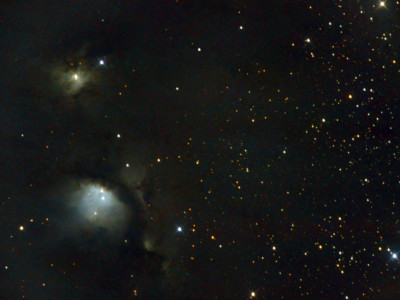
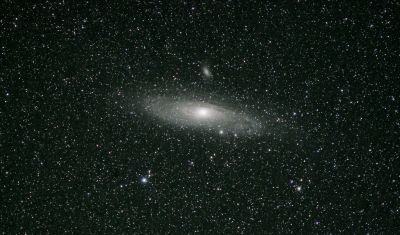
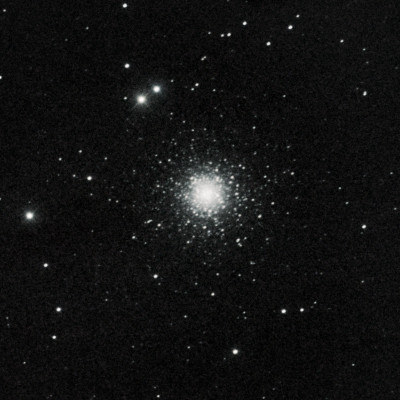
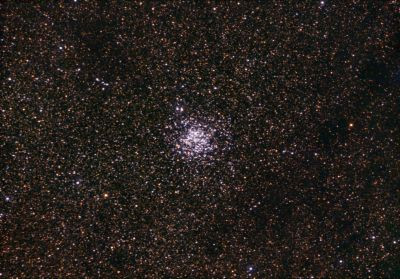
Thank you for sharing your photos - this is exactly what this project is all about! :-)
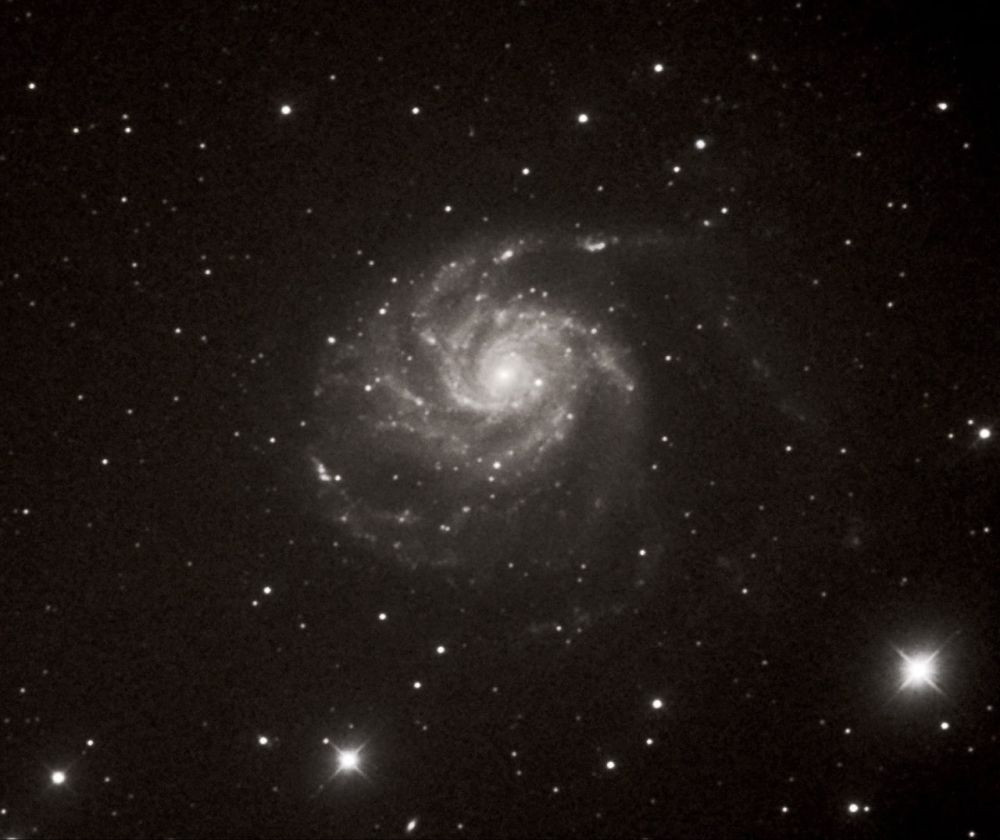
French astronomer Pierre Méchain, the discoverer of M101, described it as "a nebula without a star, very obscure, but large: 6' to 7' in diameter, between the left hand of Boötes and the tail of Ursa Major." Observing the spiral structure of M101 with modern amateur telescopes requires an aperture (lens diameter) of at least 50 mm and dark skies, due to the galaxy's low surface brightness. Under good conditions and with a telescope of 150–200 mm in diameter, up to a dozen stellar associations can be seen in its spiral arms.
Five supernova outbursts have been recorded in the galaxy: SN 1909A, SN 1951H, SN 1970G, SN 2011fe, SN 2023ixf.
We see M101 face-on; it is very similar to our Milky Way, only somewhat larger in size. The galaxy has well-defined spiral arms and a small, compact bulge (a spheroidal concentration of stars at the galaxy's center).


Comments
Comments are available only to registered users. Register or log in to leave a comment.