Thank you for sharing your photos - this is exactly what this project is all about! :-)
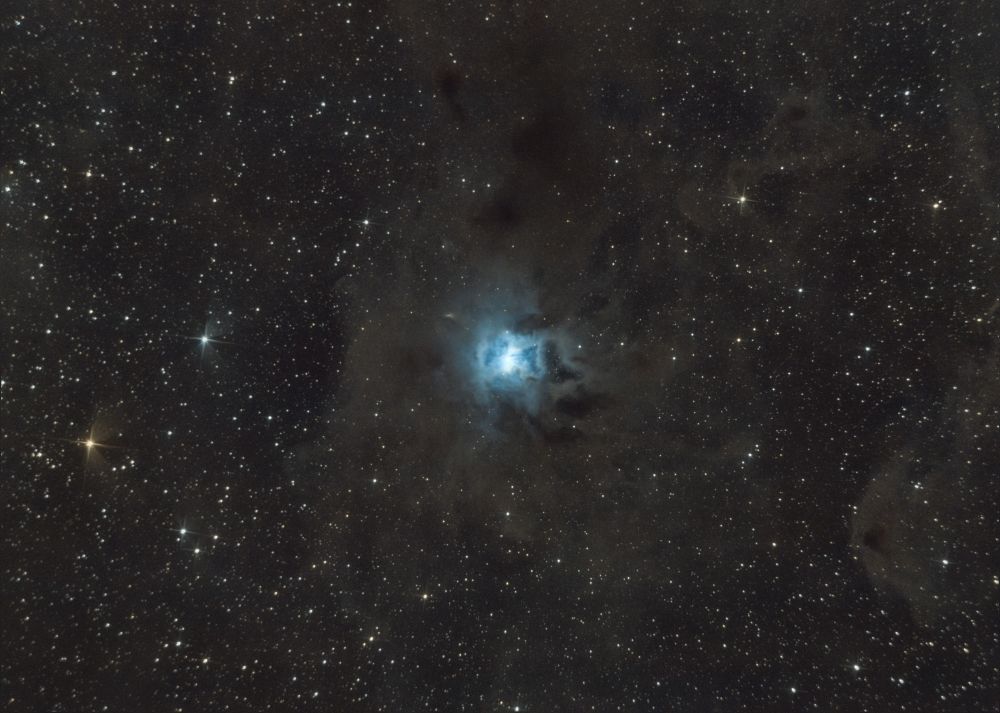
NGC 7023 Iris Nebula
Distance from Earth: about 1,300 light-years.
Discovered: October 18, 1794
Diameter: approximately 6 light-years.
Color: dominated by blue, which arises from the reflection of light from nearby stars off dust.
Structure: the nebula consists of dusty material surrounding a massive, hot, young star in the formation stage.
Features: the nebula's shape resembles a flower, and the star cluster above the center looks like a "cylinder".
33 frames at 180 seconds
Calibration: 20 flats, 10 darks, 20 biases
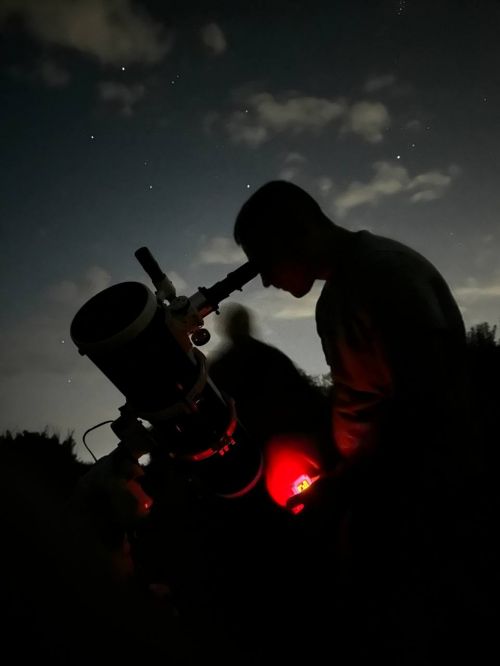
Equipment: SW 150/750 tube, HEQ5 Pro mount, Canon 6D Mark II camera, guide camera Datiyson T7C
Date: May 23, 2025, Mergyanovo, Bortle 4
Stacking in Siril, background with GraXpert, edited in PixInsight, final touches in Photoshop
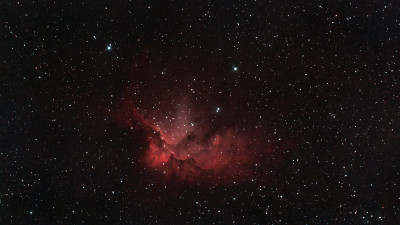
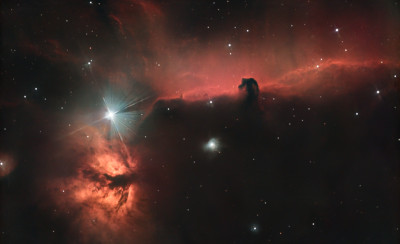
Honestly, this is the maximum I could extract with my current skill level. I tried processing without star separation, using photometry and playing with curves, but the dust hardly showed. The second attempt was with star separation and masks… in my opinion, the second version is more interesting. I’ll keep collecting more signal…
Good work. For dust, you need more integration time and ideally a darker sky. Also, the bright stars have diffraction spikes; put a mask on the corrector plate to cover the edge. It will be noticeably better.

Comments
Comments are available only to registered users. Register or log in to leave a comment.