Thank you for sharing your photos - this is exactly what this project is all about! :-)
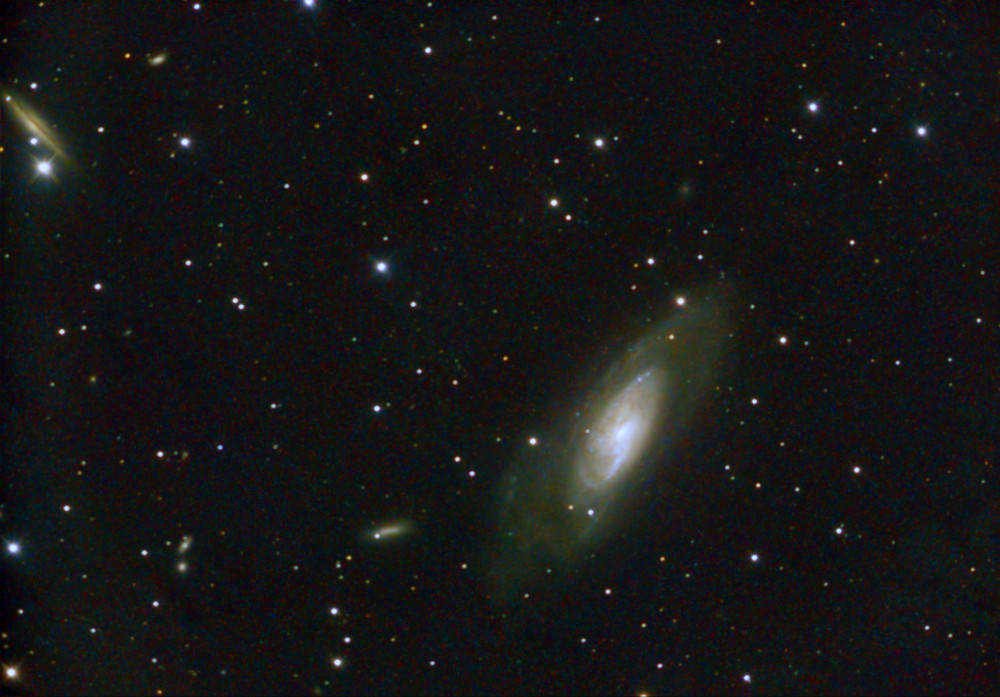
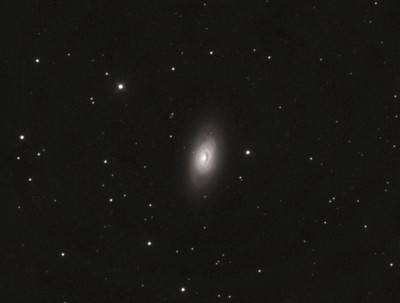
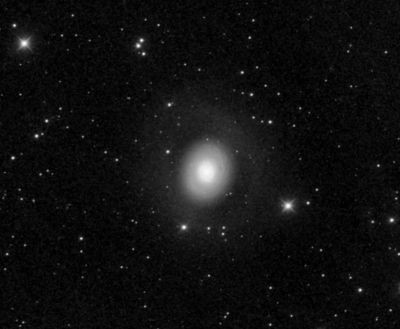
Galaxy M 106 has two additional spiral arms visible in radio and X‑ray wavelengths (discovered in the 1960s). Initially, they were thought to be jet emissions from the supermassive black hole at its center, but researchers from the University of Maryland disproved this hypothesis. Observations were conducted with six telescopes: the Digitized Sky Survey, Hubble, Very Large Array (radio), Chandra and XMM‑Newton (X‑ray), and Spitzer (infrared). Analysis revealed that the arms consist of gas heated by shock waves; powerful outflows from the nucleus, capable of generating such waves, were detected in radio wavelengths.
M 106 is a bright Sbp‑type galaxy (due to a possible central bar). Its inclination is similar to that of M 31, making dust lanes clearly visible. The spiral arms end in bright regions—likely areas of recent star formation with hot, massive stars.
Add comment
Comments
There are no comments on this picture yet
Comments are available only to registered users. Register or log in to leave a comment.



Comments
There are no comments on this picture yet
Comments are available only to registered users. Register or log in to leave a comment.