DeepSkyHosting

Cygnus Loop NGC6960 NGC6992

Category:Deep Sky
Published:
1949
Cygnus Loop  NGC6960 NGC6992NGC 6974NGC 6960NGC 6979NGC 6992NGC 6995IC 1340
Resolution:
3552x3552 px
File size:
3666 KB

Photo description / processing

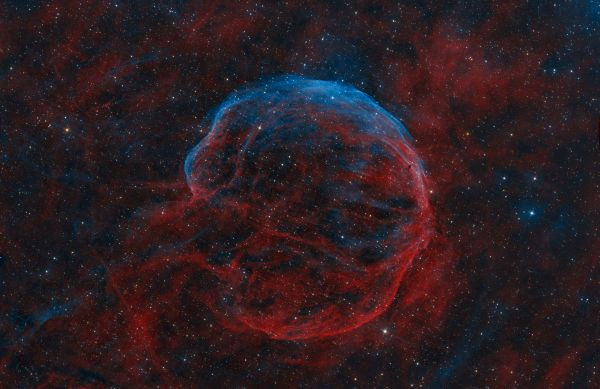
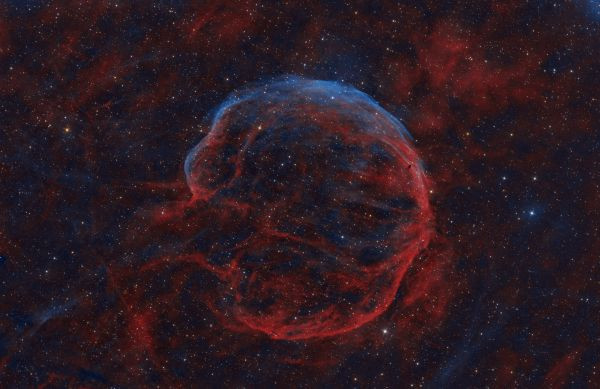
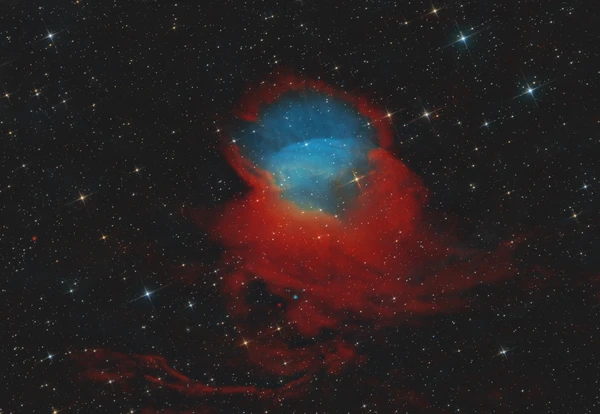
As they say, a small RASA. Samyang 135mm lens with a ZWO ASI676MC camera, 3x3 degree field, pixel scale 3 arcseconds per pixel. I made an aperture stop in front of the lens and glued an M48 ring into it to screw in a filter. I shot for one night and couldn’t figure out why there were strange reflections in the image and the stars looked triangular. I tried adjusting everything, but nothing helped. Then I gave up and placed the filter between the lens and the camera—everything fell into place. But I kept the aperture stop in front of the lens. I shot for one night, totaling almost 2 hours. I really liked the level of detail, though of course more integration time would help. A year ago, I photographed the same target with an Askar 65 PHQ telescope using an Askar 0.75x reducer for 65 PHQ telescopes and a ToupTek IMX571 camera. Of course, there’s a nuance—I shot in September when the nights are dark, while this time it was still twilight. But the difference in resolution isn’t that big. See for yourself.

Technical information

Telescope/Lens
Samyang 135mm f/2 ED UMC
Camera
ZWO ASI676MC
Mount
МТ-120
Guide Scope
50mm Finder Scope
Guide Camera
T7M
Software
N.I.N.A., Pixinsight, Adobe Photoshop
Location
Екатеринбург, район озера Глухое., Россия

Light pollution

Orange, Bortle 6 zone

Date taken

Exposure

  • 57 × 120″ · ISO/Gain: 180 · LAIDA 7hm ·

Total exposure: 1 h 54 m

Photo versions

Cygnus Loop  NGC6960 NGC6992
Current photoUpdated
Cygnus Loop NGC6960 NGC6992

Jul 18th, 2024

1 h 54 m

As they say, a small RASA. Samyang 135mm lens with a ZWO ASI676MC camera, 3x3 degree field, pixel scale 3 arcseconds per pixel. I made an aperture stop in front of the lens and glued an M48 ring into it to screw in a filter. I shot for one night and couldn’t figure out why there were strange reflections in the image and the stars looked triangular. I tried adjusting everything, but nothing helped. Then I gave up and placed the filter between the lens and the camera—everything fell into place. But I kept the aperture stop in front of the lens. I shot for one night, totaling almost 2 hours. I really liked the level of detail, though of course more integration time would help. A year ago, I photographed the same target with an Askar 65 PHQ telescope using an Askar 0.75x reducer for 65 PHQ telescopes and a ToupTek IMX571 camera. Of course, there’s a nuance—I shot in September when the nights are dark, while this time it was still twilight. But the difference in resolution isn’t that big. See for yourself.
Show changes
Previous version
Current version

Comments

More photos by Oleg Novoselov