DeepSkyHosting

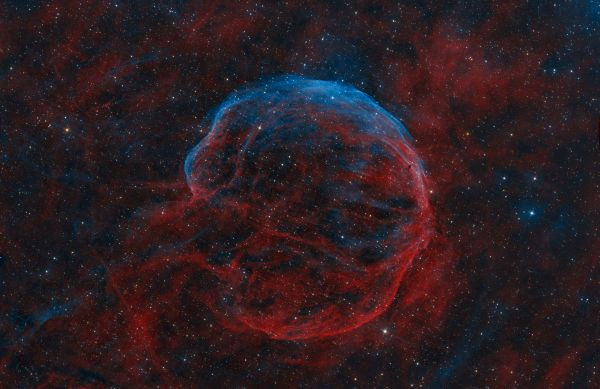
Wolf Rayet 134 Ring Nebula in Cygnus

Category:Deep Sky
Published:
646
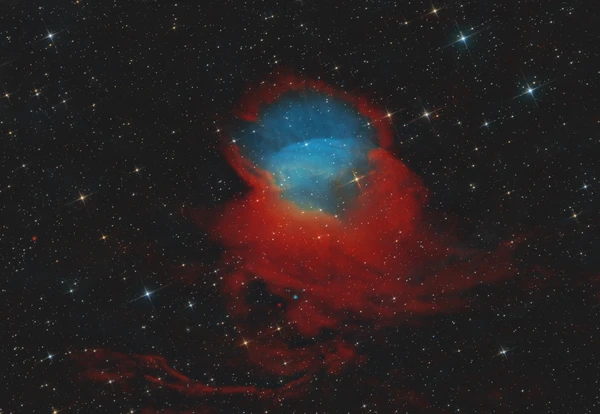
Wolf Rayet 134 Ring Nebula in CygnusNGC 6883
Resolution:
6107x4021 px
File size:
7666 KB

Photo description / processing

I captured a bit of the sky, added some frames. Wolf-Rayet 134 (WR 134) is a Wolf-Rayet variable star, located about 6000 light years from Earth in the constellation Cygnus, surrounded by a faint bubble nebula inflated by intense radiation and fast wind from the star. Wolf-Rayet stars are extremely hot, bright, massive stars and one of the rarest known classes of stars. As of 2018, only 154 such stars had been discovered in the Milky Way. Some of them form impressive nebulae, such as the Crescent Nebula (NGC 6888), due to their strong stellar winds, intense ultraviolet radiation, and gas clouds they ejected in the early stages of their relatively short lives. The Wolf-Rayet nebula around the Wolf-Rayet star WR 134 was first noticed in 1971.

Technical information

Telescope/Lens
Прямофокусник 300/996 "Изд.№3"
Camera
Touptek IMX 571 C
Mount
МТ-120
Guide Scope
Kenko ED 60/400
Guide Camera
T7M
Accessories
Sharpstar 0.95x MPCC
Software
N.I.N.A., Pixinsight, Adobe Photoshop
Location
Екатеринбург, район озера Глухое., Россия

Light pollution

Orange, Bortle 6 zone

Date taken

Exposure

  • 69 × 300″ · ISO/Gain: 152 · Optolong L-Ultimate ·

Total exposure: 5 h 45 m

Photo versions

Wolf Rayet 134 Ring Nebula in Cygnus
Current photoUpdated
Wolf Rayet 134 Ring Nebula in Cygnus

Nov 20th, 2025

5 h 45 m

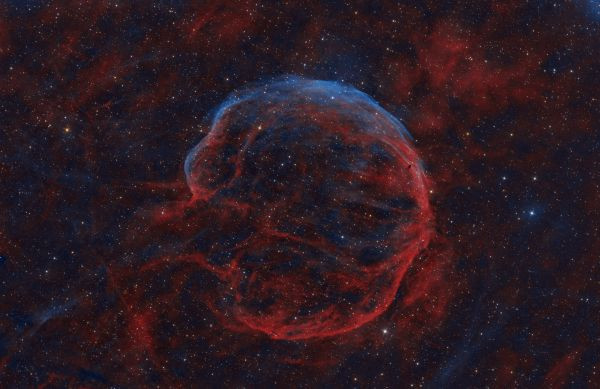
I captured a bit of the sky, added some frames. Wolf-Rayet 134 (WR 134) is a Wolf-Rayet variable star, located about 6000 light years from Earth in the constellation Cygnus, surrounded by a faint bubble nebula inflated by intense radiation and fast wind from the star. Wolf-Rayet stars are extremely hot, bright, massive stars and one of the rarest known classes of stars. As of 2018, only 154 such stars had been discovered in the Milky Way. Some of them form impressive nebulae, such as the Crescent Nebula (NGC 6888), due to their strong stellar winds, intense ultraviolet radiation, and gas clouds they ejected in the early stages of their relatively short lives. The Wolf-Rayet nebula around the Wolf-Rayet star WR 134 was first noticed in 1971.
Show changes
Previous version
Current version

Comments

There are no comments on this photo yet.

More photos by Oleg Novoselov