

Oct 15th, 2026
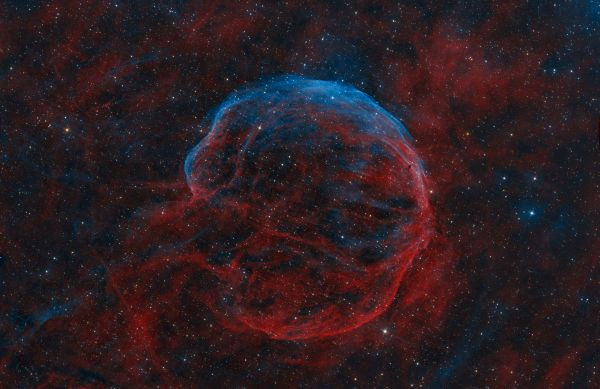
49 h 25 m
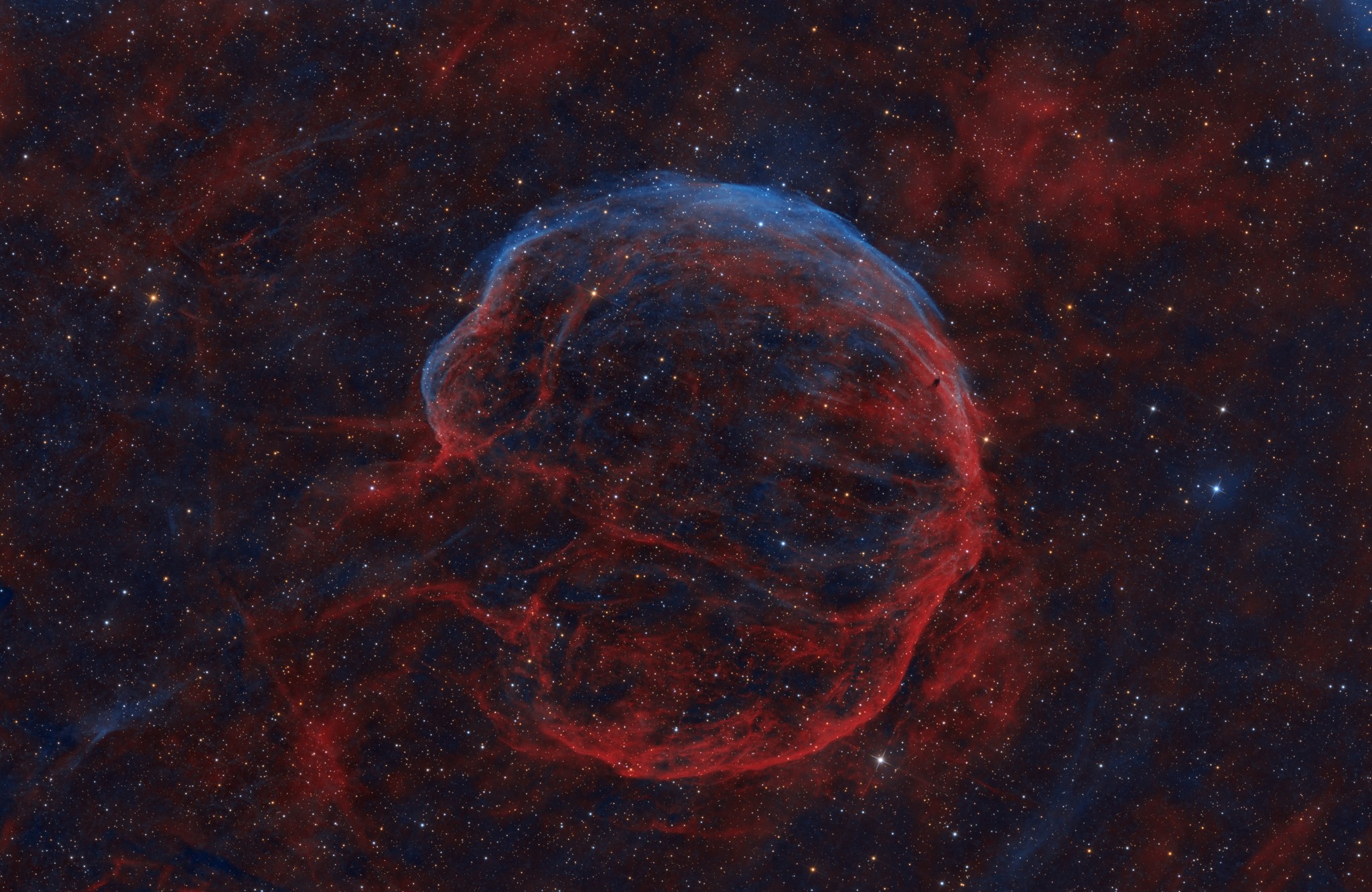
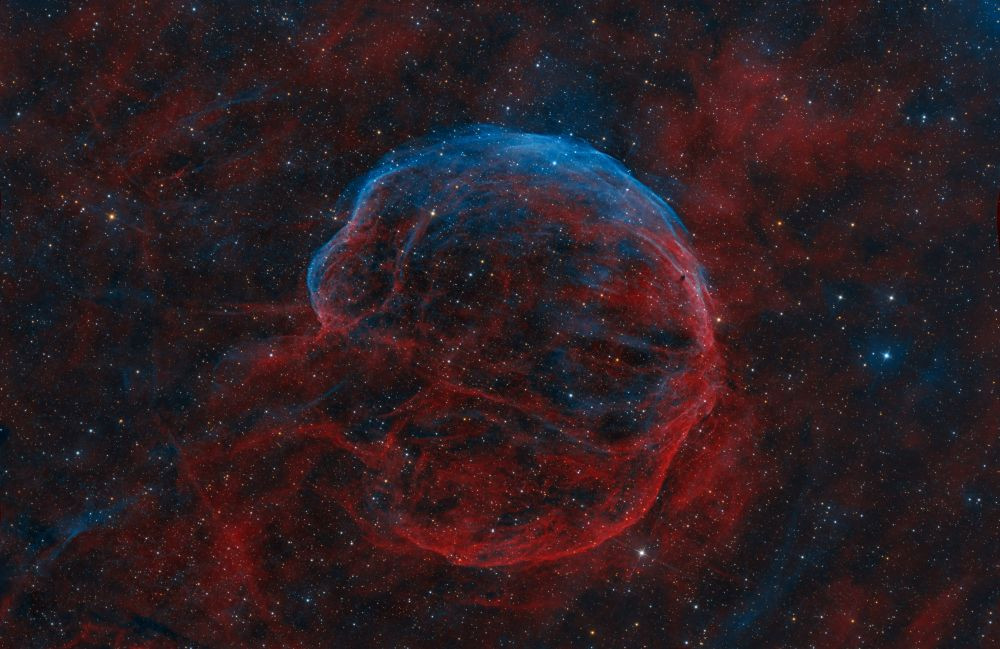
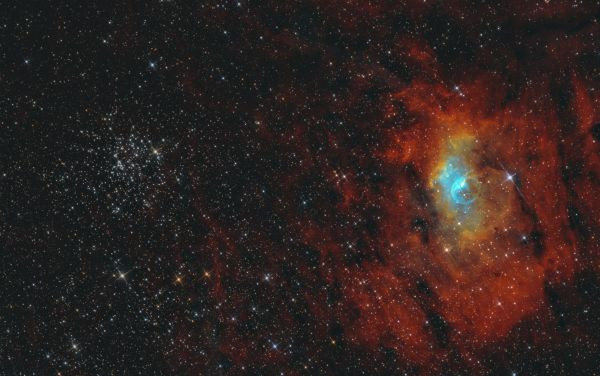
Combined all the footage from '25 and this year into a single frame — with this, I'm done shooting this object.Noise is a bit lower, oxygen is a bit more, but it's at the level of a glitch — after all, this is a fairly faint object for my light pollution.So: 2025 imaging — scope Pryamofokusnik 300/996 "Ed. No. 3", color camera Touptek IMX 571 C, filter Optolong L-Ultimate, integration 10h 40min2026 imaging — scope Pryamofokusnik 300/996 "Ed. No. 3", mono camera Touptek IMX 571 M, filters Scorpio Ha-3nm and Oiii-3nm, integration 20h 15minIn parallel, on the same mount, hung a SharpStar 13028HNT scope, with a QHY5III585M camera and a Touptek filter wheel, filters also Touptek RGB and HO-6.5nm — from it we got 17 hours 15 minutes of integration. I couldn't synchronize with the guide scope, so I just threw out bad frames that fell on dithering and on meridian flips.Total combined integration: 49 hours 15 minutes.I took the stars from the SharpStar 13028HNT, since it has a filter wheel, and on the big telescope with a filter slider I just didn't manage to shoot them. LBN 576 \ (or SNR G116.9+00.1, Abell 85 and CTB 1) — a faint supernova remnant located almost 10,000 light-years from Earth. It is also estimated to be about 10,000 years old. Until recently it was considered a planetary nebula, but recent studies confirm that it is a supernova remnant, the closest known to Earth. This object, also called the Burnt Air Balloon or the Medulla Nebula, is the remains of ejecta formed during a supernova explosion. The expanding shock wave of material interacts with a large gas cloud, causing various elements such as hydrogen, oxygen, and sulfur to emit light at specific wavelengths. The image also includes a large emission nebula consisting of several massive clouds of gas and dust.

Comments
There are no comments on this photo yet.
Sign up or sign in to leave a comment.