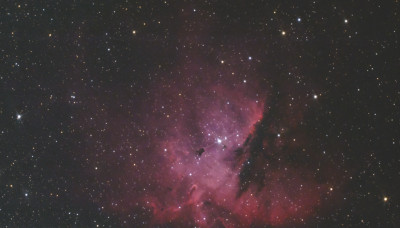
What is this object❓
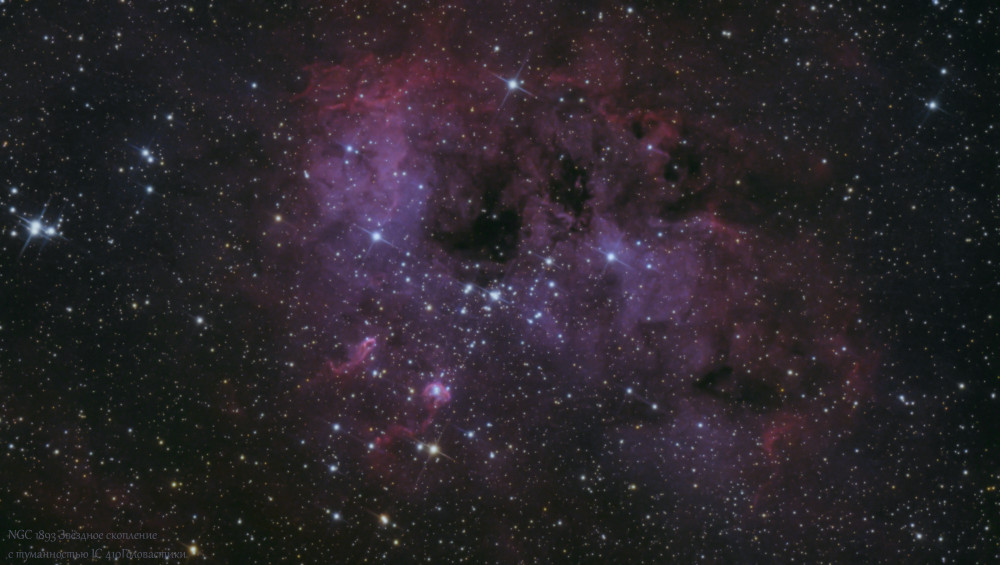
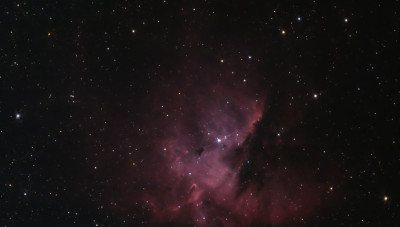
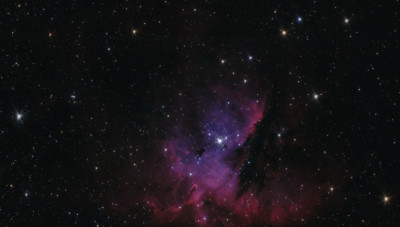
IC 410 is an emission nebula in the constellation Auriga. It is located approximately 12,000 light-years from Earth. The diameter of the nebula itself is about 100 light-years.
It got its nickname because of two prominent structures inside. Astronomers sometimes designate them as Simeis 129 and Simeis 130. These dense clouds of gas and dust really do resemble tadpoles: they have a "head" and a long "tail." Each such "tadpole" stretches for about 10 light-years.
Why are they like this?
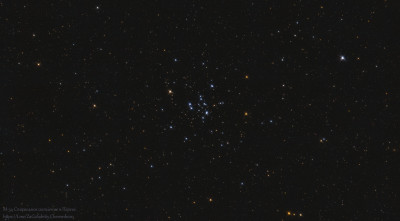
The secret is that inside IC 410 there is a young open star cluster, NGC 1893. It is only about 4 million years old, but some studies allow for an even younger age—around 2–3 million years.
Distance from Earth: approximately 10,000–12,400 light-years.
Size of the nebula: more than 100 light-years in diameter.
The cluster contains hot, massive stars of spectral classes O and B. Their powerful radiation and stellar winds not only make the surrounding gas glow (ionize it), but also actively "sculpt" the shapes of the nebula.
That is why the "tails" of the "tadpoles" are elongated and directed away from the center of the cluster: they are shaped by radiation pressure and the flow of charged particles. And in the dense "heads," star formation processes are likely beginning right now or will begin soon.
New stars may be forming inside these "tadpoles": dense regions are shielded from harsh radiation, which allows gravity to compress the gas. Thus, IC 410 is an example of a region of active star formation.
Over time, the intense radiation and stellar winds from the newly formed stars will destroy the surrounding gas structures, and the nebula will gradually dissipate, leaving behind only the star cluster.
The nebula was discovered by astronomer Max Wolf on September 25, 1892.

Comments
There are no comments on this picture yet
Comments are available only to registered users. Register or log in to leave a comment.