
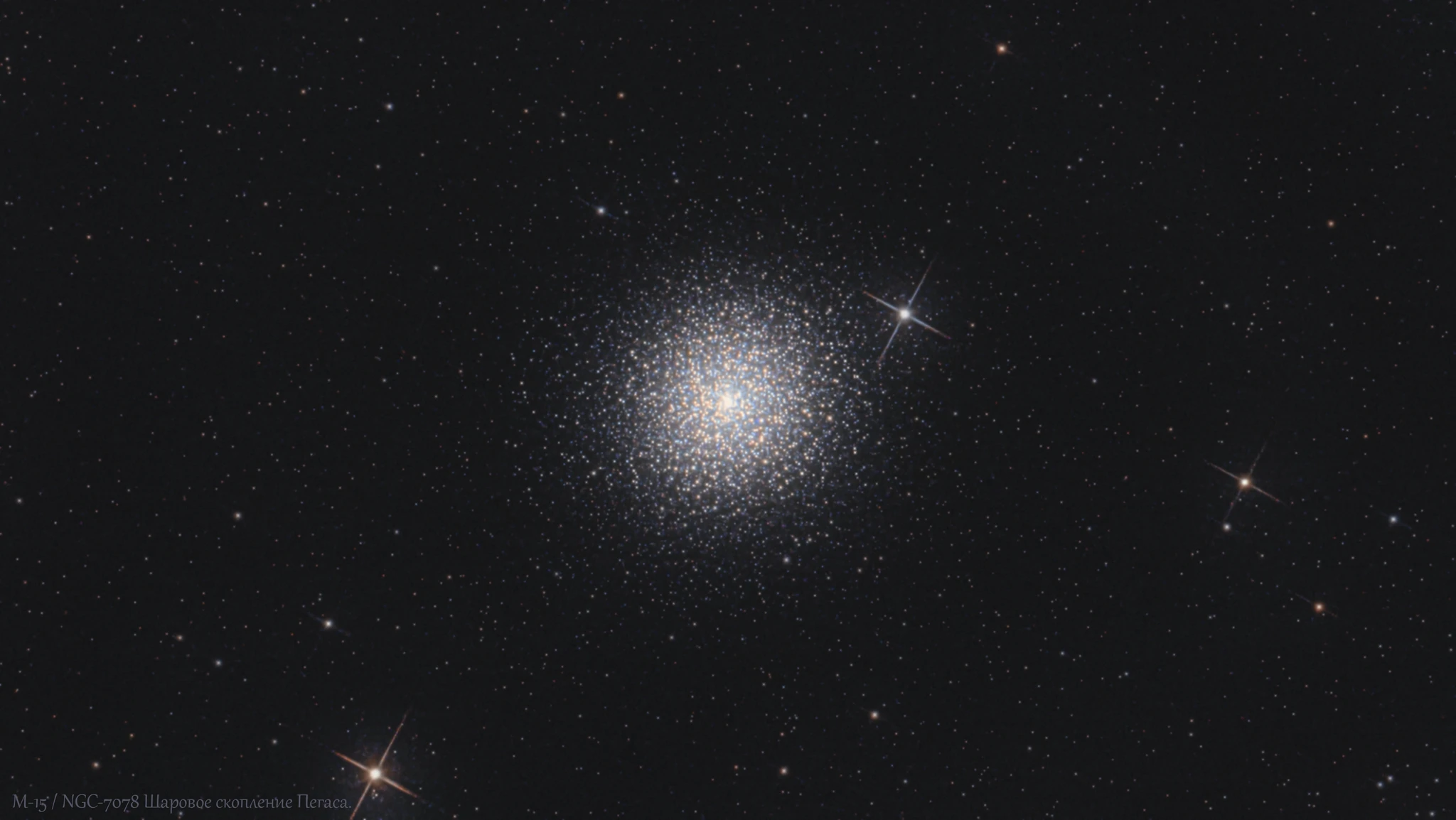
M 15 \ NGC 7078 Pegasus Globular Cluster.
- Resolution:
- 3666x2065 px
- File size:
- 5452 KB
Photo description / processing
M 15 (also known as Messier 15 or NGC 7078) is a globular star cluster located in the constellation Pegasus. It is considered one of the brightest and densest representatives of its class in the Milky Way.
Key characteristics.
Distance from Earth: about 33,600 light-years (approximately 10,300 parsecs).
Apparent magnitude: 6.2.
Apparent dimensions: 18 arcminutes.
Absolute magnitude: −9.2. This means its luminosity is approximately 360,000 times that of the Sun.
Radius: about 100 light-years.
Age: about 12 billion years, making it one of the oldest known globular clusters.
Metallicity ([Fe/H]): −2.34.
Concentration class: IV.
Discovery history.
The cluster was discovered in 1746 by the French astronomer of Italian origin Jean-Dominique Maraldi. In 1764, Charles Messier independently discovered this object and included it in his catalog, mistakenly taking it for a nebula. William Herschel was later able to resolve individual stars in the cluster in 1783.
Features.
M 15 is notable for several features:
Core collapse. The central region of the cluster has undergone contraction, resulting in an extremely high density of stars in the core. Half of the cluster's mass is concentrated within the central 10 light-years.
Rich stellar composition. The cluster contains more than 100,000 stars. Among them are 112 variable stars, in the number of which M 15 is among the top three in the Galaxy. At least 9 pulsars have also been found here, including a possible binary system.
Planetary nebula. In 1928, Francis G. Pease discovered the planetary nebula Pease 1 in the cluster—the first ever discovered inside a globular cluster.
Potential black hole. There may be a black hole in the cluster's core with a mass of about 1,300 solar masses. However, there is another version: the mass concentration may be the result of gravitational interaction among many stars.
Complex kinematics. Studies using the MUSE instrument on the Very Large Telescope (VLT) have shown that the rotation axis of the core of M 15 is offset relative to the rotation axis of the main body of the cluster.
Observation.
M 15 is one of the brightest representatives of globular clusters in the autumn sky. Under good observing conditions (absence of light pollution), it can be seen with the naked eye as a hazy little star. In field binoculars the cluster is clearly visible, although its diffuse nature does not immediately stand out because of the high concentration of stars toward the center. In a telescope of even moderate aperture, the difference in stellar density between the center and the halo of the cluster is clearly visible.
Almost exactly at the center of the cluster is the tiny planetary nebula PK 66-27.1. To observe it, it is recommended to use a narrowband OIII interference filter (a "deep-sky filter"), which makes the nebula stand out as a brighter "star" against the background of faint stars.
To find the cluster, you can use the star Epsilon Pegasi (Enif) as a guide. M 15 is located approximately 3.5 degrees west and 2.25 degrees north of it.
Technical information
- Telescope/Lens
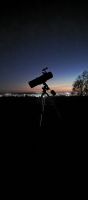
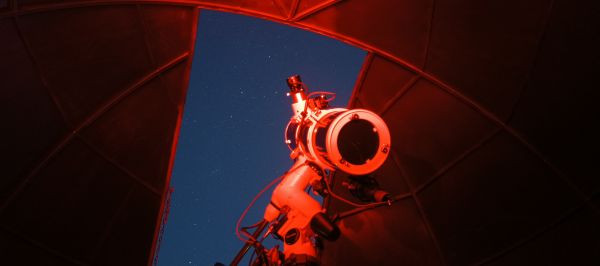
- SkyWatcher 150/750
- Camera
- SV705C
- Mount
- Exos2
- Guide Scope
- 50|180
- Guide Camera
- ToupTek GPCMOS02000KPA
- Software
- Nina. Siril. PixInsight. Adobe.
- Location
- Черемхово, Russia
Light pollution
Yellow, Bortle 5 zone
- Date taken
Exposure
- 189 × 30″ · ISO/Gain: 150 · UV/IR Cut
Total exposure: 1 h 35 m

Comments
There are no comments on this photo yet.
Sign up or sign in to leave a comment.