DeepSkyHosting
EN
Upload

Comet 220P/McNaught

Epsio
21278
Category:Comets
Published:
224
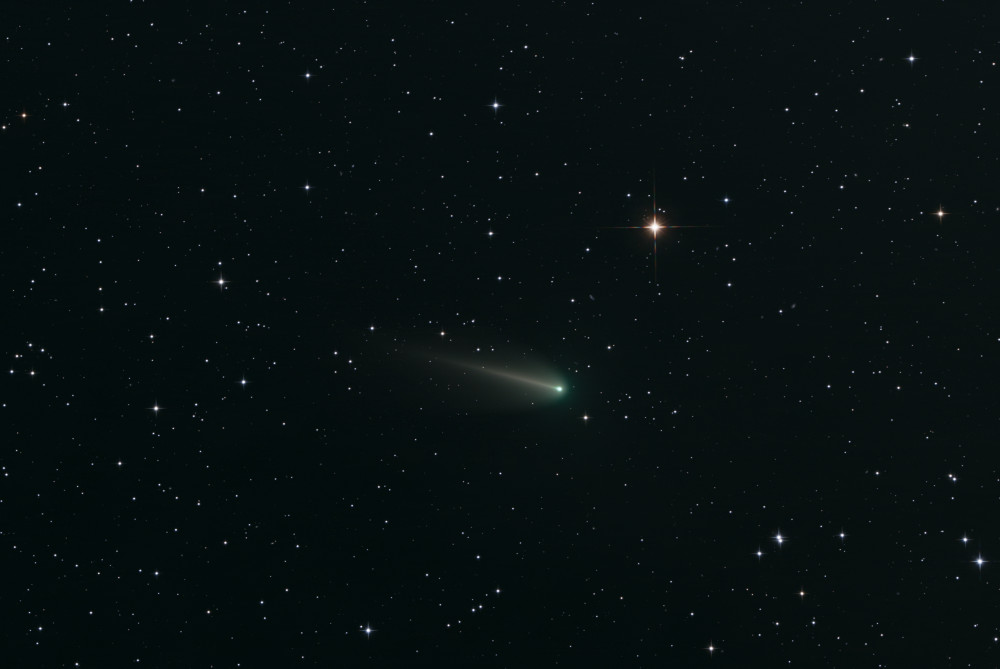
Comet 220P/McNaught
100%
Comet 220P/McNaught
Loading original…

Scroll to zoom · Drag to move · Double-click: fit / 1:1

Resolution:
6224x4168 px
File size:
24312 KB
Share

Photo description / processing

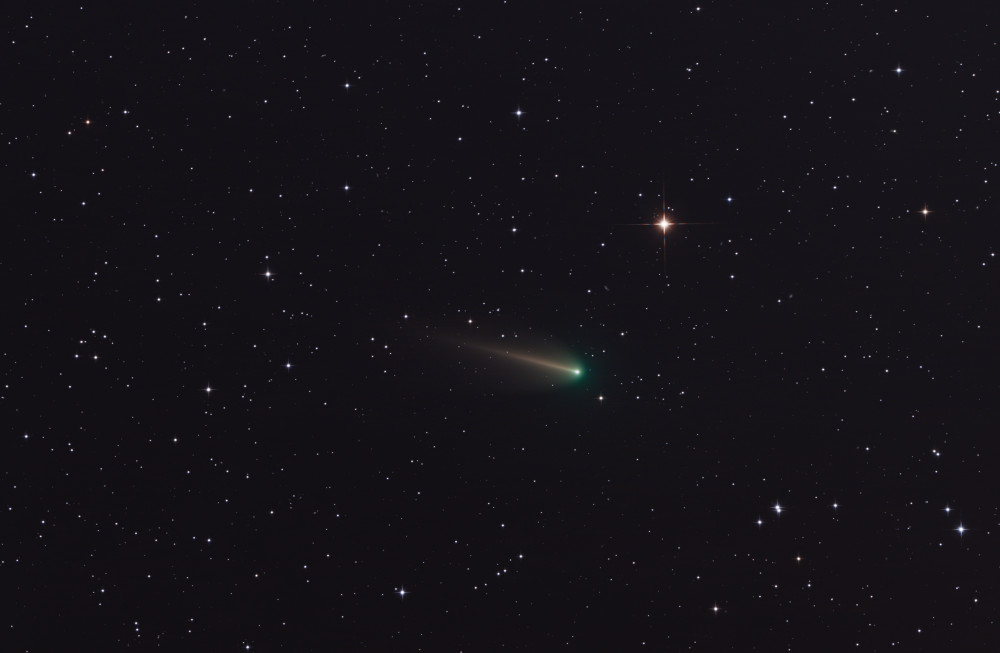
Comet 220P/McNaught is a short-period comet discovered on May 20, 2004, by Australian astronomer Robert H. McNaught. It completes one orbit around the Sun in approximately 5.5 Earth years. In 2026, the comet became one of the brightest. The main feature of the object was two powerful outbursts of activity: the first occurred on May 31, and the second on August 3. They were presumably caused by partial fragmentation of the nucleus and the ejection of a large amount of material, which increased the reflection of sunlight. After the first outburst, the comet's brightness increased from magnitude 18 to magnitude 8 — roughly 10,000 times. After the second, it increased from magnitude 14 to magnitude 7, that is, by about another 600 times. Currently, the brightness of 220P/McNaught is gradually decreasing. If no new outbursts occur, the comet should return to its normal state within two to three months.

Processing took a lot of time and effort. I processed the comet for the first time. I had to connect a hard drive; calibration and other files took up about 350 GB.

Technical information

Telescope/Lens
Sky-Watcher 150/750
Camera
ToupTek ATR 2600c
Mount
HEQ5 Pro
Guide Scope
Angeleyes 50mm
Guide Camera
Zwo 662
Accessories
MEYON 2” MPC 1x
Software
siril
Location
г.Пролетарск, Ростовская область, Россия
Date taken
t.me/AstroPodd/518

Exposure

  • 150 × 60″ · ISO/Gain: 100 · SVBONY 2" UV/IR CUT

Total exposure: 2 h 30 m

Photo versions

Comet 220P/McNaught
Updated
Comet 220P/McNaught

Aug 28th, 2026

2 h 30 m

Comet 220P/McNaught is a short-period comet discovered on May 20, 2004, by Australian astronomer Robert H. McNaught. It completes one orbit around the Sun in approximately 5.5 Earth years. In 2026, the comet became one of the brightest. The main feature of the object was two powerful outbursts of activity: the first occurred on May 31, and the second on August 3. They were presumably caused by partial fragmentation of the nucleus and the ejection of a large amount of material, which increased the reflection of sunlight. After the first outburst, the comet's brightness increased from magnitude 18 to magnitude 8 — roughly 10,000 times. After the second, it increased from magnitude 14 to magnitude 7, that is, by about another 600 times. Currently, the brightness of 220P/McNaught is gradually decreasing. If no new outbursts occur, the comet should return to its normal state within two to three months.The processing took a lot of time and effort. I processed the comet for the first time.) I had to use a hard drive; calibration and other files took up about 350 GB.
Comet 220P/McNaught
Current photo
Comet 220P/McNaught

Aug 28th, 2026

2 h 30 m

Comet 220P/McNaught is a short-period comet discovered on May 20, 2004, by Australian astronomer Robert H. McNaught. It completes one orbit around the Sun in approximately 5.5 Earth years. In 2026, the comet became one of the brightest. The main feature of the object was two powerful outbursts of activity: the first occurred on May 31, and the second on August 3. They were presumably caused by partial fragmentation of the nucleus and the ejection of a large amount of material, which increased the reflection of sunlight. After the first outburst, the comet's brightness increased from magnitude 18 to magnitude 8 — roughly 10,000 times. After the second, it increased from magnitude 14 to magnitude 7, that is, by about another 600 times. Currently, the brightness of 220P/McNaught is gradually decreasing. If no new outbursts occur, the comet should return to its normal state within two to three months.Processing took a lot of time and effort. I processed the comet for the first time. I had to connect a hard drive; calibration and other files took up about 350 GB.
Show changes
Previous version
Current version

Comments

There are no comments on this photo yet.

More photos by Epsio