Thank you for sharing your photos - this is exactly what this project is all about! :-)
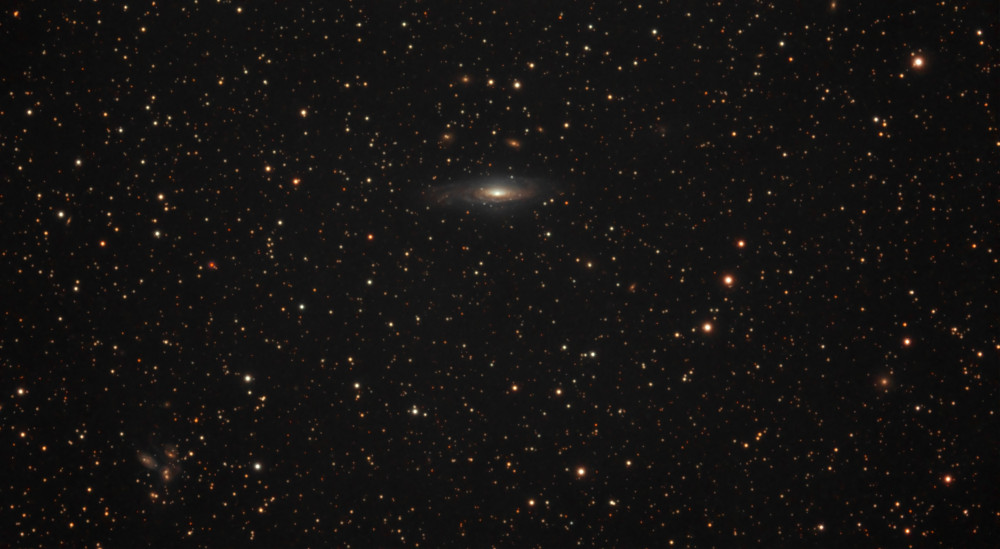
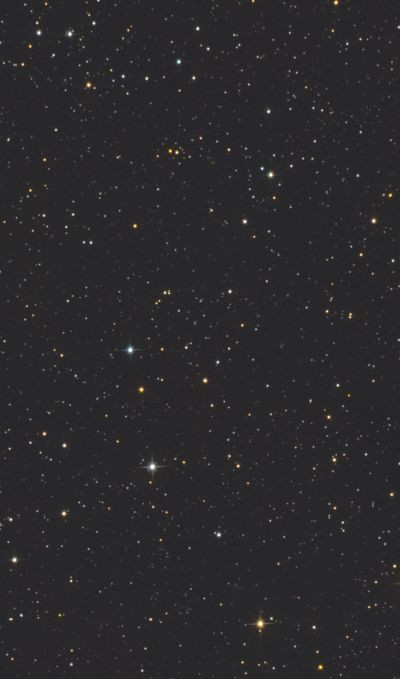
22-24.09.24 NGC 7331 and Stephan's Quintet
NGC 7331 is a spiral galaxy in the constellation Pegasus. It is located about 43 million light-years from the Sun. It was discovered by William Herschel in 1784.
Similar to the Milky Way, NGC 7331 has a well-defined spiral structure, so it is often called a "twin" of our Galaxy, and its image is frequently used to give an idea of the appearance of the Milky Way. It is the brightest object not included in the Messier catalog (magnitude 9.5m, surface brightness 13.4m).
In 1959, 2013, and 2014, supernova explosions were recorded in the galaxy, designated SN 1959D, SN 2013bu, and SN 2014C respectively, with peak apparent magnitudes reaching 16-15.5m.
Stephan's Quintet is a group of five galaxies in the constellation Pegasus, four of which form a compact group, while the fifth galaxy is merely projected onto the group. The group was discovered by French astronomer Édouard Stephan in 1877.
Four of the five galaxies in Stephan's Quintet are in constant interaction. During the study of the quintet, the Spitzer Space Telescope revealed the presence of a huge intergalactic shock wave, produced by one of the galaxies "falling" into another at a speed of millions of kilometers per hour.
It has been determined that NGC 7320 is located at a distance of ≈39 million light-years from Earth, while the other galaxies of the quintet are at a distance of 210–340 million light-years.
Add comment
Comments
There are no comments on this picture yet
Comments are available only to registered users. Register or log in to leave a comment.

Comments
There are no comments on this picture yet
Comments are available only to registered users. Register or log in to leave a comment.