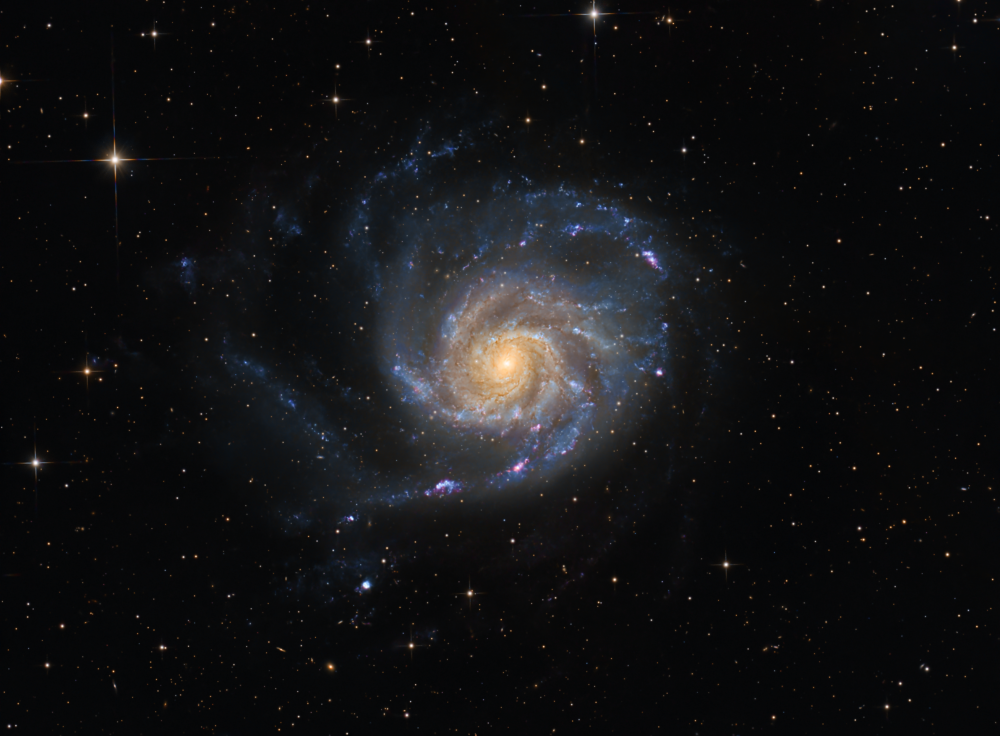
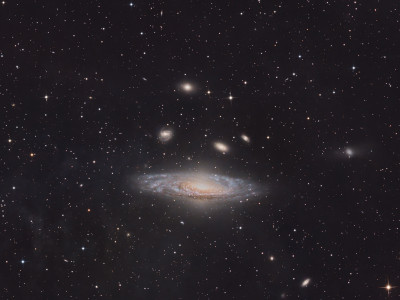
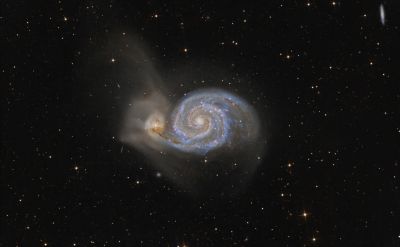
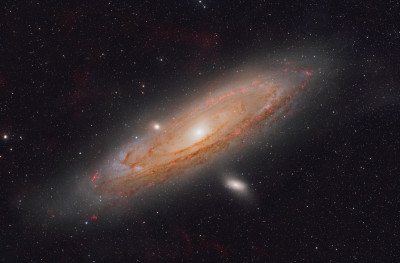
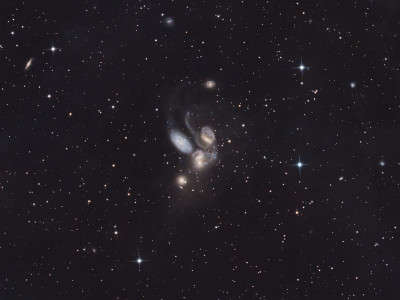
I don't remember what the final exposure time was. I might have simply decided that the core was blown out, so I lowered the exposure to 120 seconds to preserve it, or conversely, I might have decided that even at 300 seconds the core was still fine. Most likely the first option, since there are more frames.
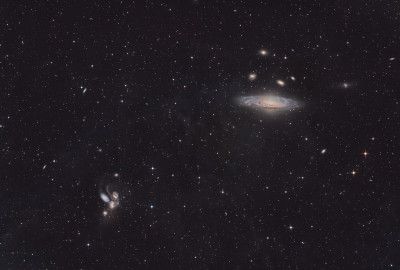
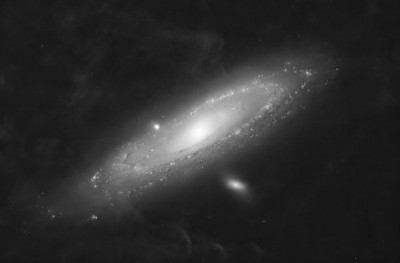
Generally, exposure time is chosen so that the image doesn't show clipping in the linear stage. For galaxies, the problematic area is the core. If the core appears as a "dot," it's not a big deal—you can shoot and not worry about it. If it's already a "blob," then you need to think about it. Either lower the exposure a bit or take another set of subs with a shorter exposure to capture the core, which you can then "blend in" later to get the desired result.
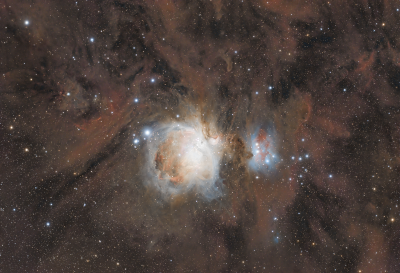
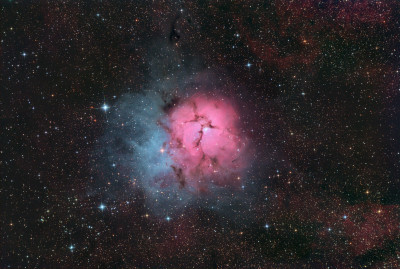
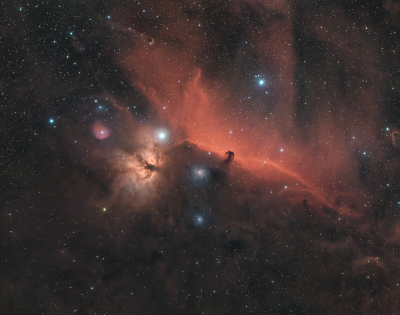
That's basically it. You increase the exposure as much as the target and your equipment allow. If the target is complex and you want the best result, you'll likely need to shoot at least two different exposure times. The most challenging target, as is well known, is the Orion Nebula.
Later, you'll come to another stretching method: selective (area-based) stretching. This is essentially what happens when you adjust curves, but often you want to separate the object into layers and stretch them independently—for example, the core, the body of the object, and the dust.





Comments
You have images with two different exposures, 120" and 300". Is there a specific purpose for this? If so, may I ask what it is?
Comments are available only to registered users. Register or log in to leave a comment.