


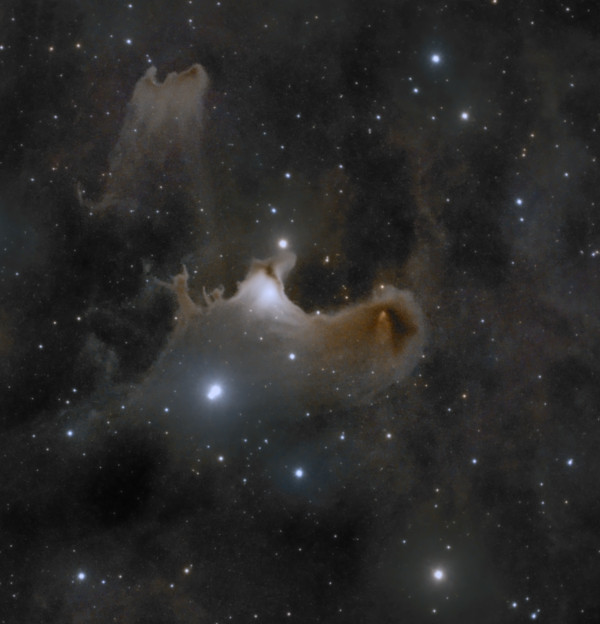
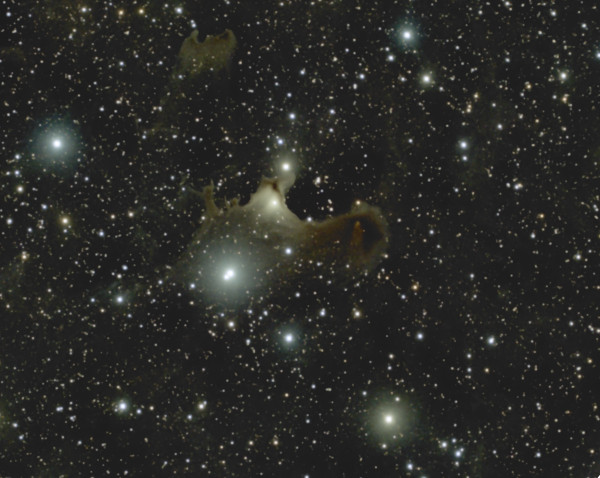
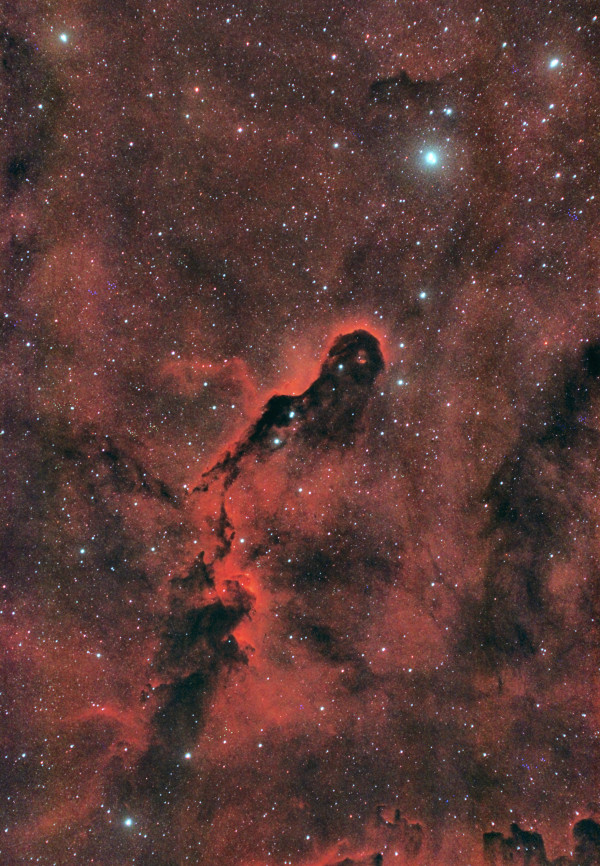
Cygnus Loop. Processing of my data by Yuri Toropin.
Technical information
- Telescope/Lens
- Canon EF 200mm f/2.8 Lens
- Camera
- QHY QHY8L
- Mount
- Sky-Watcher NEQ6 Pro
- Guide Scope
- НПЗ 50/200
- Guide Camera
- QHY5-II
- Software
- Pixinsight, Adobe Photoshop
- Location
- д. Еловка Вачского р-на Нижегородской обл. , Россия
Light pollution
Green, Bortle 4 zone
- Date taken
Exposure
Photo versions

Show changes


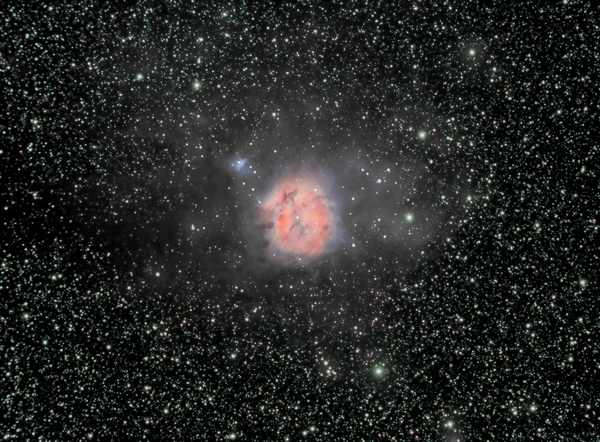

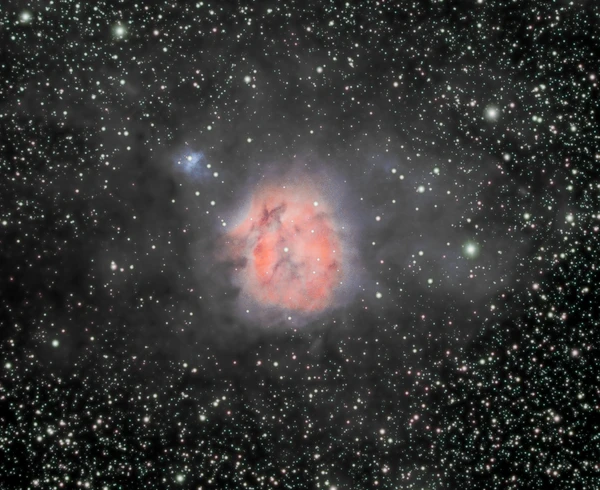
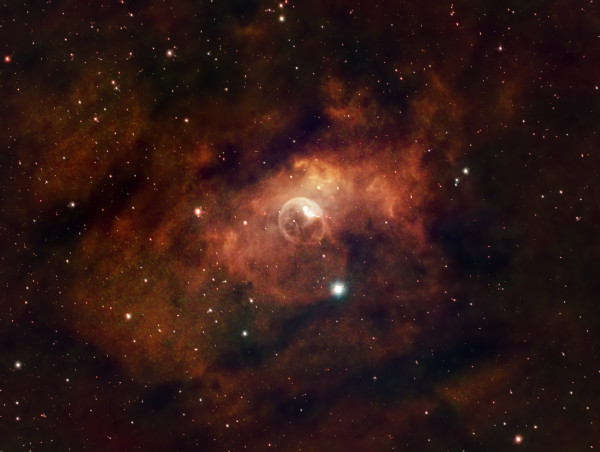
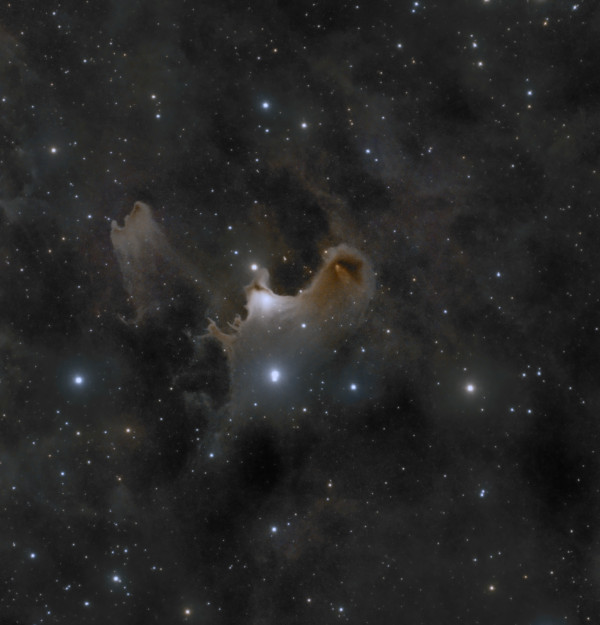

Comments
"Material characteristics
- very dense 'star soup', making straightforward processing difficult
- strong gradients across the frame
Processing sequence used in PixInsight, also as a personal reference:
0. Perform astrometry on the image using the ImageSolver script (required later for photometric color calibration)
1. Separate stars (Stars) and nebulae (Nebulae) into two images using StarNet2 on linear data
Removing gradients
2. Extract a background model from Nebulae using DynamicBackgroundExtraction
3. Divide both Stars and then Nebulae by the background model in PixelMath
4. Neutralize the background on Nebulae (balance the peaks in HistogramInformation)
Color calibration
5. Perform PhotometricColorCalibration on Stars
6. Note the coefficients obtained from the star color calibration (Stars), apply their inverse values to calibrate the nebulae color (Nebulae) via PixelMath
Process nebula and stars separately
7. Stretch Nebulae, reduce noise, adjust curves, save as TIFF for Photoshop
8. Stretch Stars (more gently), save as TIFF for Photoshop
Final image assembly
9. Combine Nebulae and Stars layers in Photoshop using Linear Dodge (Add) mode, final touches, save as JPEG."
Reply
Sign up or sign in to leave a comment.
https://astronomy.ru/forum/index.php/topic,36621.msg5892521.html#msg5892521
Reply
Sign up or sign in to leave a comment.
Reply
Sign up or sign in to leave a comment.
Sign up or sign in to leave a comment.