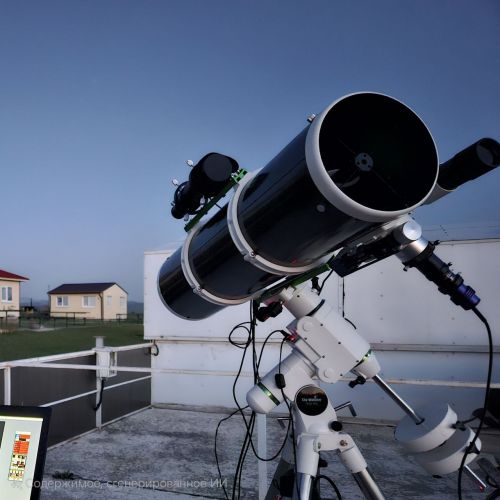
Good evening. If I may, a practical question. I'm considering using a small SV106 with a focal length of 240 mm as a guide scope. However, for the intended guiding, I only have a 70mm refractor with a focal length of 400 mm. Could you tell me if this is too large, or could I try using such a setup for guiding?
Well, it should work in principle. The larger the guide scope, the more stars it sees, which is good. The Svbony SV106 has an aperture ratio of f/4, while your refractor is f/6 (even though the diameter is larger, the focal length is also longer, so it actually sees fewer stars).
+ The guide scope must be firmly mounted, and with a larger mass, that becomes more difficult.
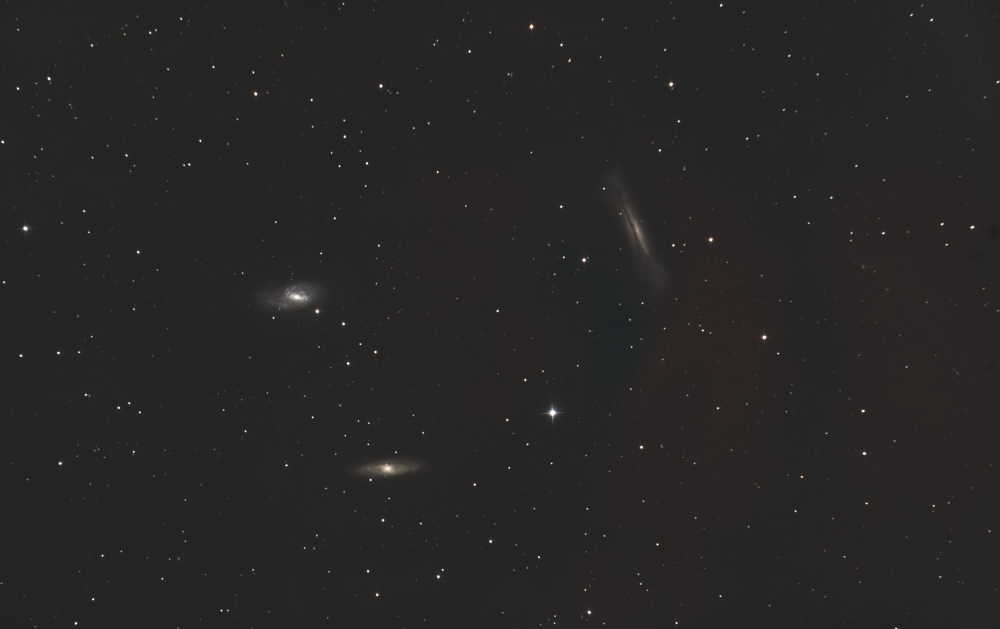
In summary, I can say: Give it a try, look at the stars, check the star drift in PHD2. If it's less than 1", that's excellent. During this imaging session, my star drift was around 2.3", which is poor, but I was too cold to adjust everything (and it was my first time anyway).
Yes, you're right that it's heavy and will need to be securely fastened. I was actually thinking of mounting it on the declination axis along with a counterweight.
Thanks for the advice and for paying attention to my question! :)
25 Feb, 2025
Reply
Comments are available only to registered users. Register or log in to leave a comment.

Comments
+ The guide scope must be firmly mounted, and with a larger mass, that becomes more difficult.
In summary, I can say: Give it a try, look at the stars, check the star drift in PHD2. If it's less than 1", that's excellent. During this imaging session, my star drift was around 2.3", which is poor, but I was too cold to adjust everything (and it was my first time anyway).
Thanks for the advice and for paying attention to my question! :)
Comments are available only to registered users. Register or log in to leave a comment.