Thank you for sharing your photos - this is exactly what this project is all about! :-)
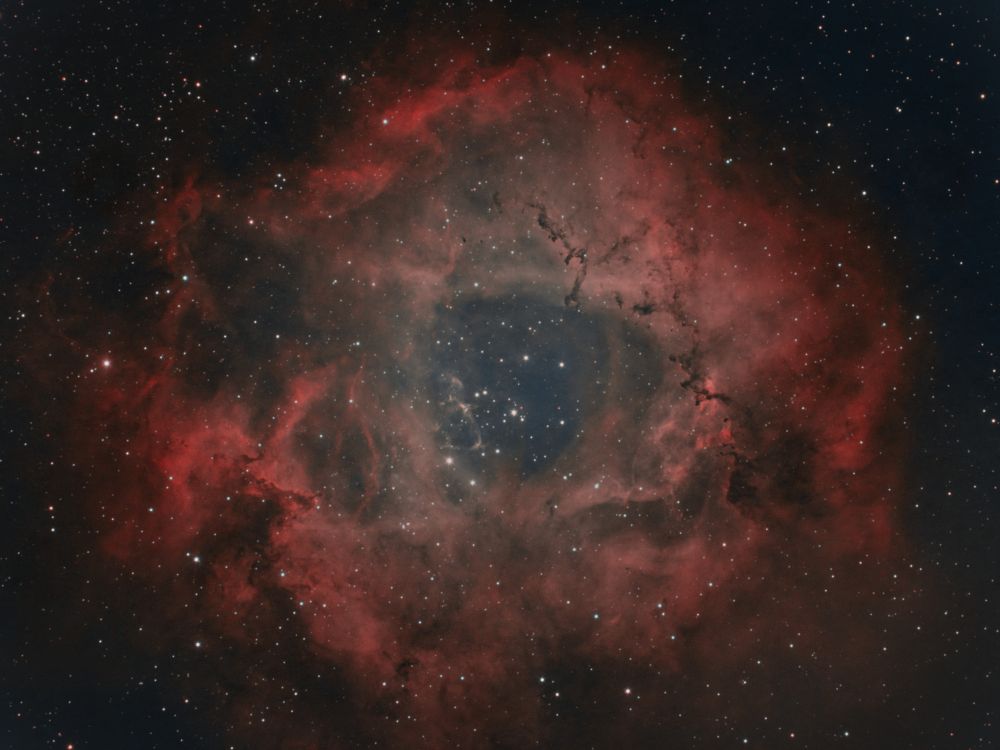
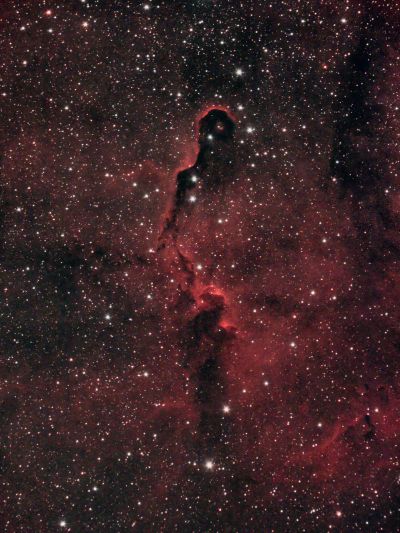
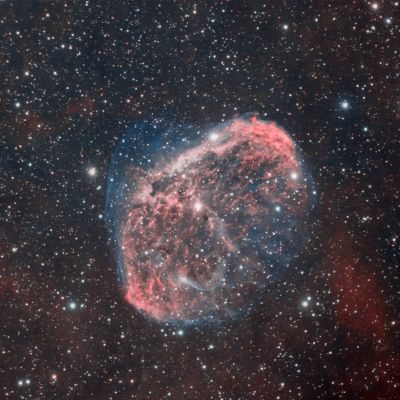
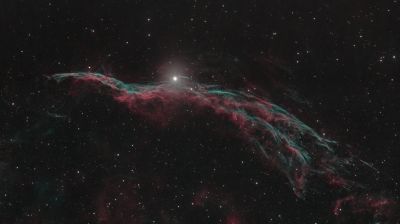
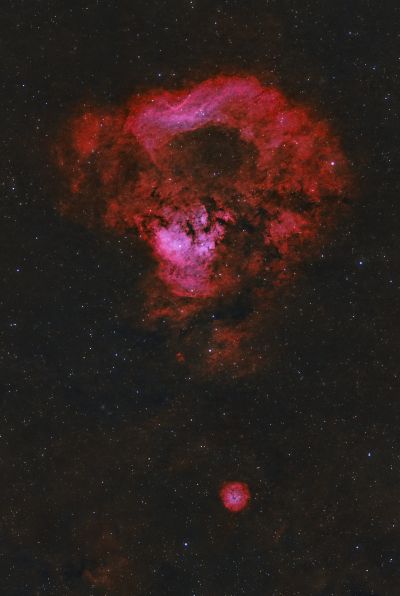
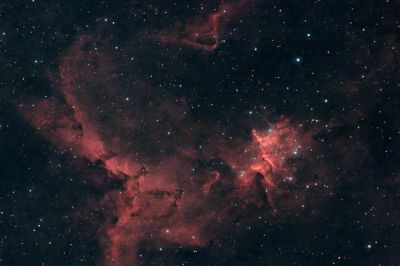
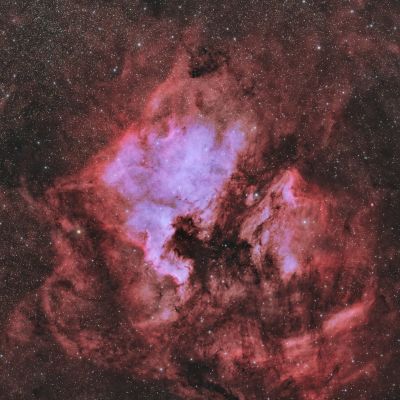
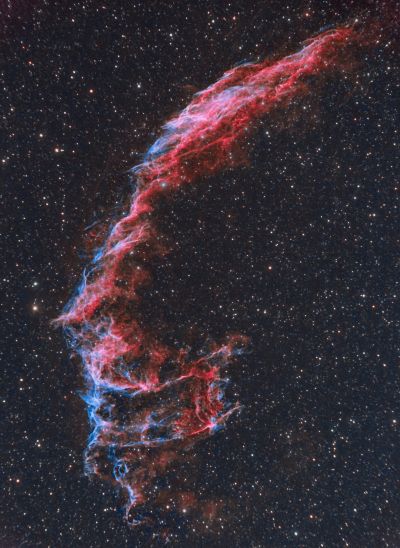
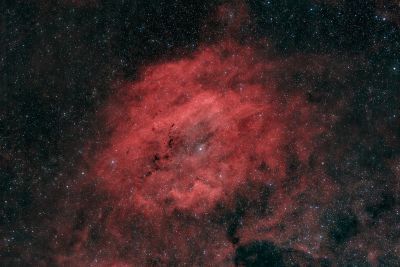
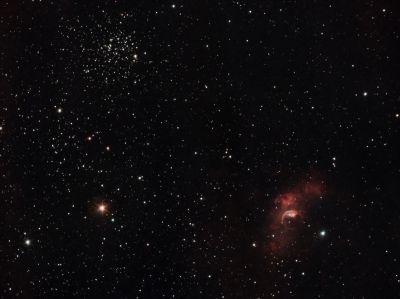
Hooray! The first night suitable for shooting since the beginning of December. Never mind that it was a full moon and I was shooting about 20 degrees from the Moon. The raw frames were scary to look at, but after some gradient work in HOO, it came together nicely. And yes, Starnet++ version 2 is absolutely brilliant—everyone should download it immediately!
Cloudy weather, so I reprocessed the Rosette Nebula using esoteric formulas to extract oxygen. Thanks to the Siril team for Pixel Math in the new version—it was…
Hooray! The first night suitable for shooting since the beginning of December. Never mind that it was a full moon and I was shooting about 20 degrees from the M…
Very roughly speaking, if the minimum size of visually significant details is 3 pixels, then the image can be reduced by a factor of 3 without losing the perception of those details. In doing so, all single-pixel noise will disappear, and contrast will form naturally.
Not exactly. Binning still occurs on monochrome CCD matrices before the ADC and serves to amplify the signal, but overall, the analogy probably works.
For the megapixels of a color camera, you either need to take the square root or trust somewhat deceptive algorithms like VNG.
17 Feb, 2022
Reply
Comments are available only to registered users. Register or log in to leave a comment.

Comments
But the full size could be slightly reduced—to match the image resolution with the level of detail.
For the megapixels of a color camera, you either need to take the square root or trust somewhat deceptive algorithms like VNG.
Comments are available only to registered users. Register or log in to leave a comment.