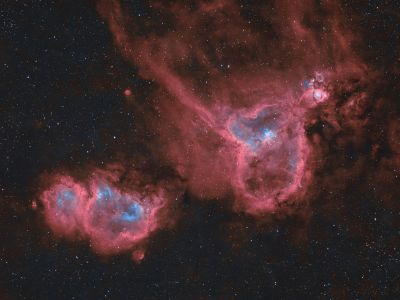
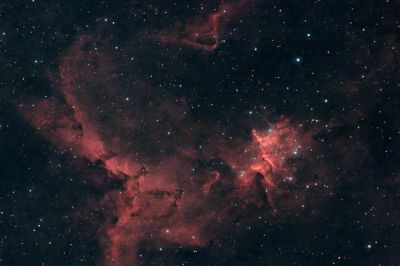
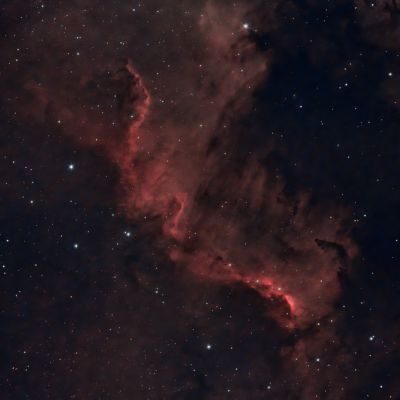
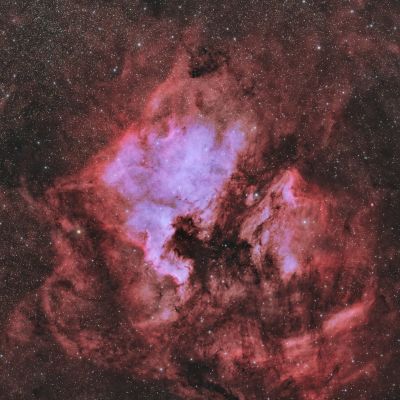
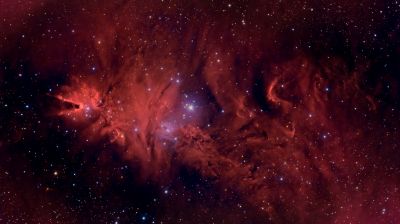
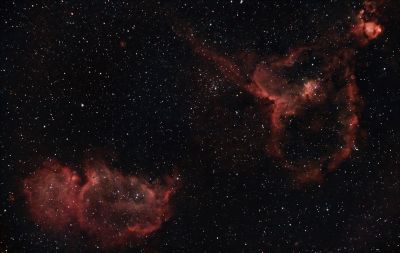
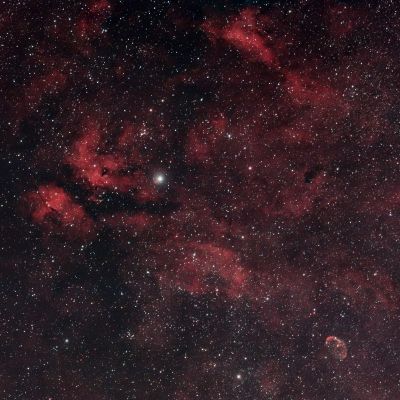
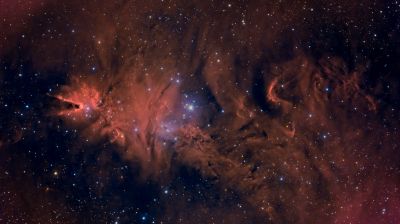
Thank you for sharing your photos - this is exactly what this project is all about! :-)
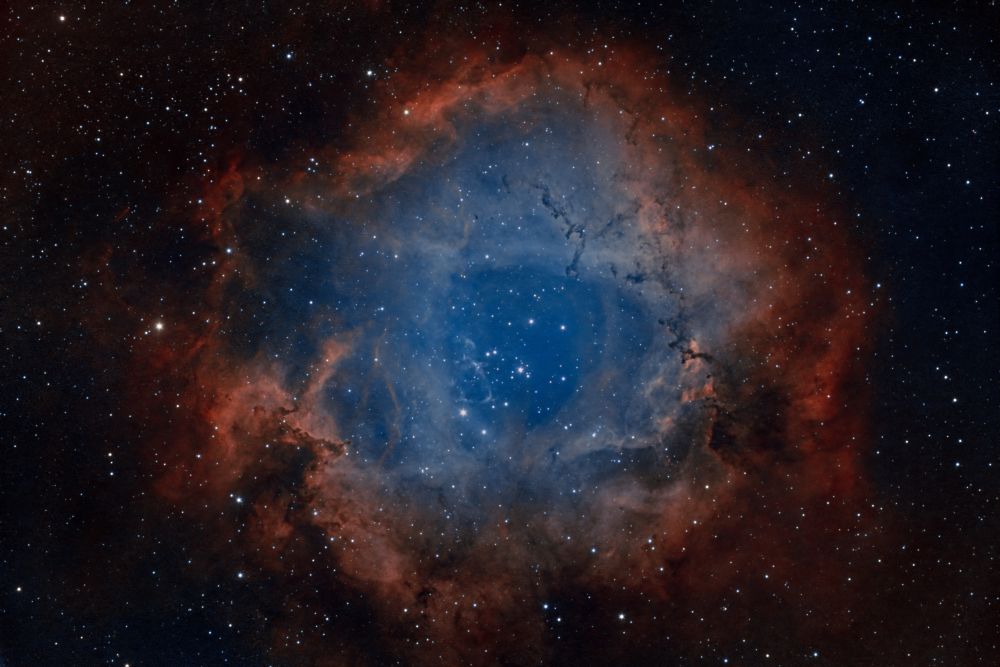
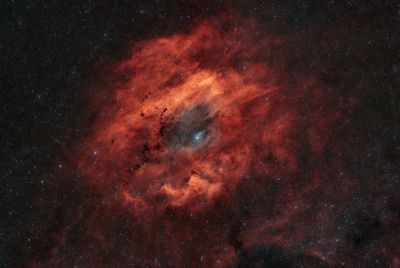
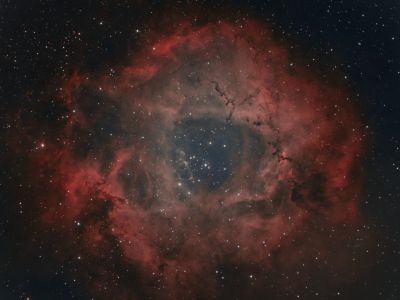
Cloudy weather, so I reprocessed the Rosette Nebula using esoteric formulas to extract oxygen. Thanks to the Siril team for Pixel Math in the new version—it was sorely missed. The formulas themselves, in a foreign language, are here: https://thecoldestnights.com/2020/06/pixinsight-dynamic-narrowband-combinations-with-pixelmath/
Cloudy weather, so I reprocessed the Rosette Nebula using esoteric formulas to extract oxygen. Thanks to the Siril team for Pixel Math in the new version—it was…
Hooray! The first night suitable for shooting since the beginning of December. Never mind that it was a full moon and I was shooting about 20 degrees from the M…
Cool that pixel math is now available. But the processing needs some work—the oxygen looks a bit unnatural, like a blob. The formulas are just for combining channels in HOO or SHO palettes. Since this was shot with a color camera, the oxygen signal is very weak. After combining with pixel math, I do separate processing for the oxygen and then blend it back using a mask. And it definitely doesn’t come together right away.
I ended up on the page with the formulas from the video you recommended. Their main idea is to keep only the signal from oxygen where it dominates, which is why there's a bright spot. If you look at the many photos of the Rosette Nebula on AstroBin, it's clear that the area of oxygen dominance is captured correctly. It's just that with traditional processing, which proportionally mixes the signals from oxygen and hydrogen in the green channel, this region ends up with a whitish, pale color.
And another quick question. In my setup with a Newtonian 200 f/5 + Sharpstar 0.95 MPCC + L‑Extreme, the stars are coming out elongated. I tried adjusting the backfocus and checked the telescope collimation, but I couldn’t fix it. Have you ever experienced this effect?
The stars are stretched uniformly across the entire field in a vertical direction. When I rotate the camera with the filter, the corrector rotates as well.
But without a filter, only with a corrector, my stars are round, as they should be. Or without a corrector but with a filter. So it's not the mount's fault) Thanks for the answer.
Sorry again, a question. Do you have a 2" filter or a 1.25", and where is it placed—before the coma corrector or between the coma corrector and the sensor?
Filter 2", I shot in both configurations: the filter screwed onto the coma corrector and the filter between the coma corrector and the camera. It worked fine.


Comments
Comments are available only to registered users. Register or log in to leave a comment.