Thank you for sharing your photos - this is exactly what this project is all about! :-)
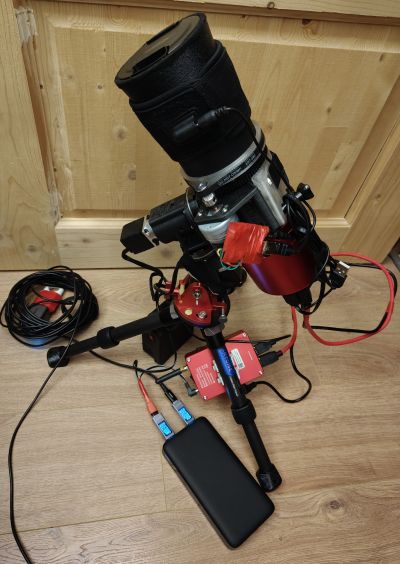
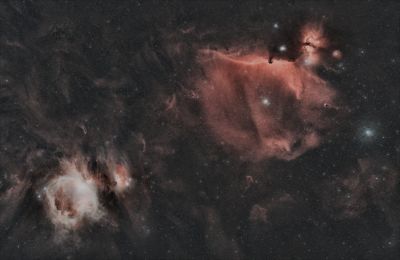
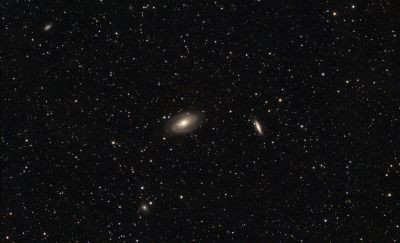
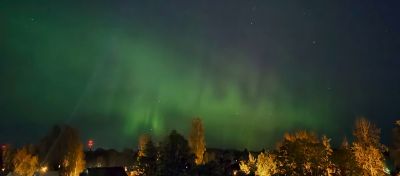
Testing another version of the homemade mount The Mount УХ-1111Ф (Made in Theмля).
Guiding was shaky at first, but then settled down to around 2" RMS. Still need to add a case for the electronics and tidy up the cable management.
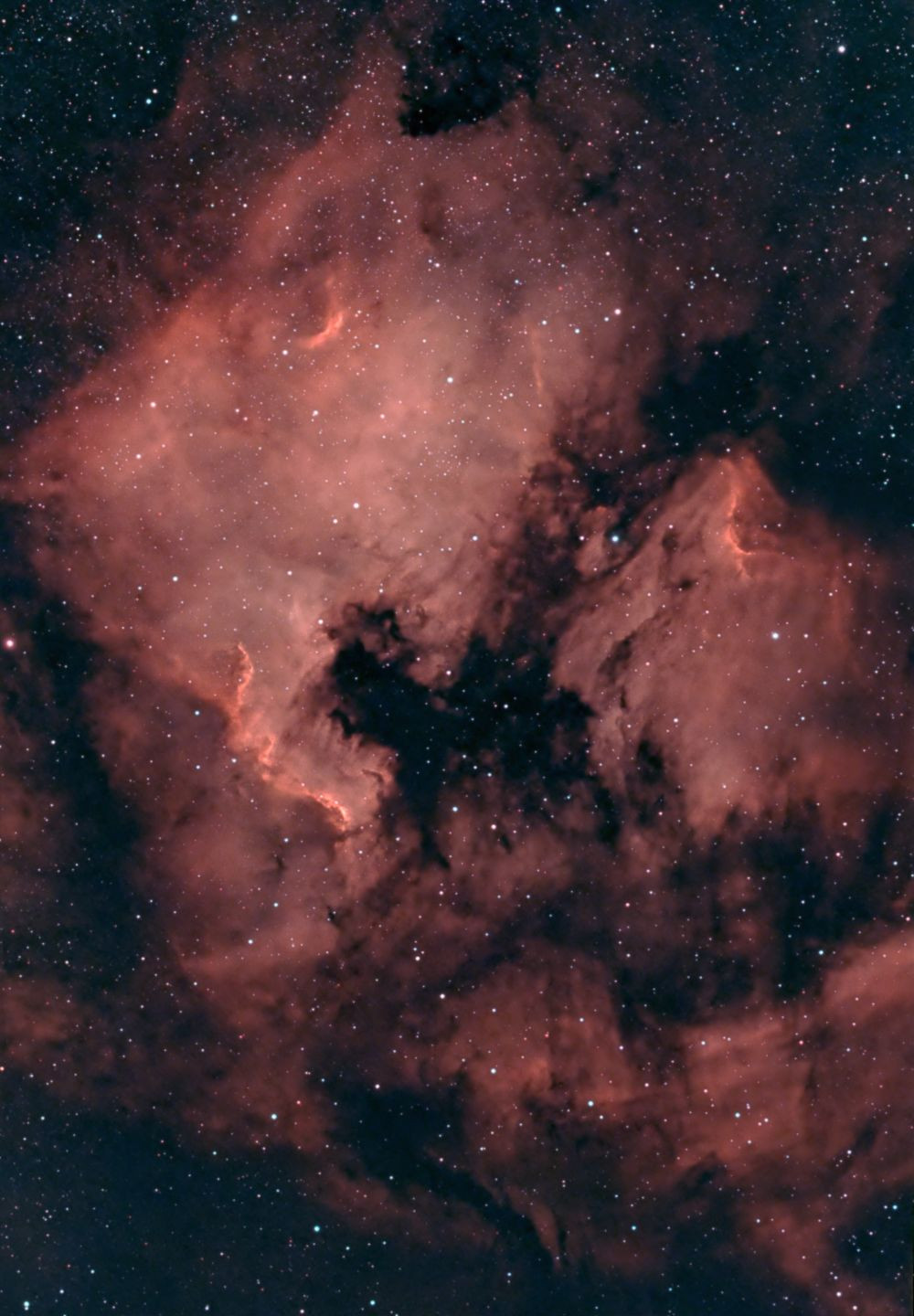
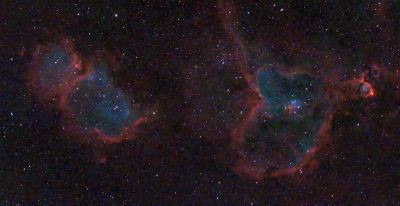
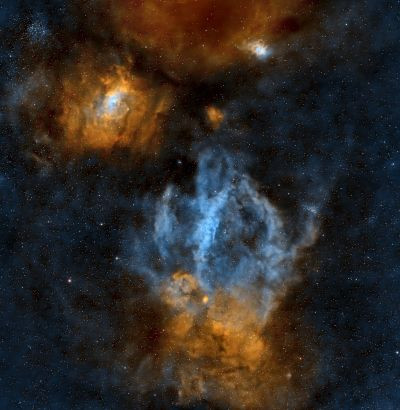
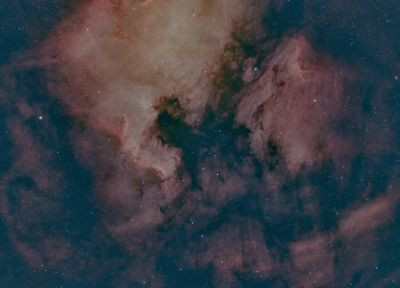
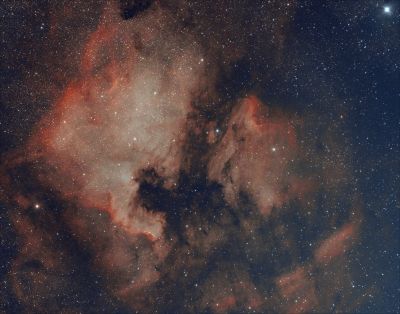
Few people manage to capture BOTH nebulae so well at the same time (the Pelican is noticeably fainter). This image gives an excellent impression of the pair.
I didn't do it on purpose; it just happened ;)
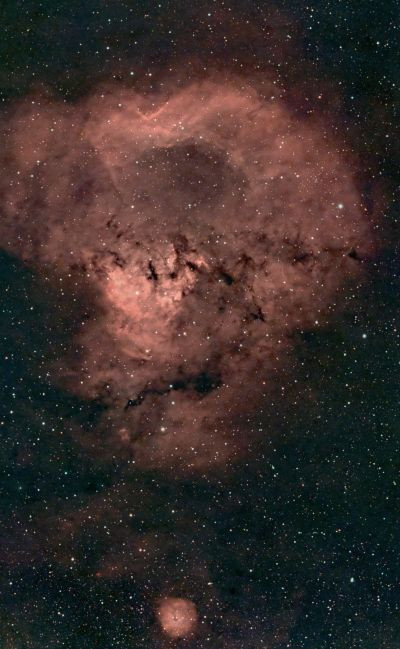
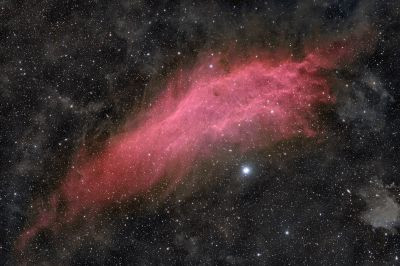
I was just testing the mount, and the object was chosen as a reference because I had just captured it on another setup.
This one: https://deepskyhosting.com/MiqhiOb
In hydrogen-alpha, the Pelican Nebula appears comparable in brightness to the North America Nebula, especially the head and the wall—at least in the stacked image.
Hydrogen-beta in the Pelican is indeed noticeably fainter.
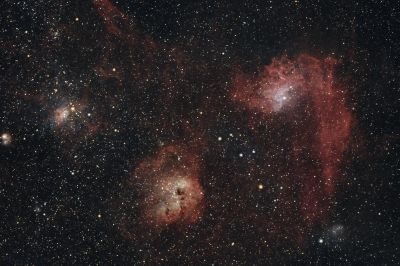
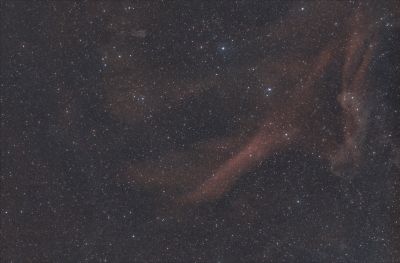
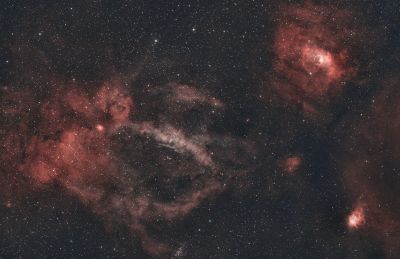
I'm judging the overall brightness in the visible spectrum. I once photographed these nebulae with a 200mm photo lens on a color camera without special filters, only a UW-IR cut filter. The Pelican Nebula is noticeably fainter. https://deepskyhosting.com/xwP2RwX
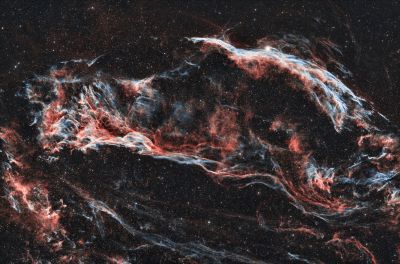
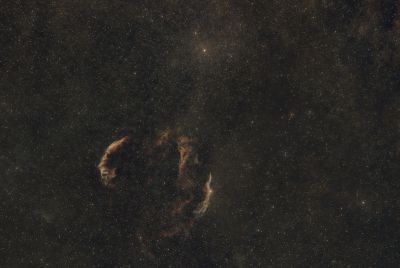
I found two unfiltered photos of this area in my collection. Including my very first astrophotography shot ;)
The Pelican Nebula does indeed appear fainter in them, and in that very first one, it's almost invisible.
So, if the brightness in Ha is comparable, then there's significantly less of everything else glowing in the Pelican.
It's no coincidence that the Pelican Nebula was discovered about ~100 years later.
Technology has come so far, however.
Nowadays, almost any camera can photograph things that professional astronomers didn't even suspect existed 100 years ago.



Comments
I was just testing the mount, and the object was chosen as a reference because I had just captured it on another setup.
This one: https://deepskyhosting.com/MiqhiOb
In hydrogen-alpha, the Pelican Nebula appears comparable in brightness to the North America Nebula, especially the head and the wall—at least in the stacked image.
Hydrogen-beta in the Pelican is indeed noticeably fainter.
https://deepskyhosting.com/xwP2RwX
Nowadays, almost any camera can photograph things that professional astronomers didn't even suspect existed 100 years ago.
Comments are available only to registered users. Register or log in to leave a comment.