Thank you for sharing your photos - this is exactly what this project is all about! :-)
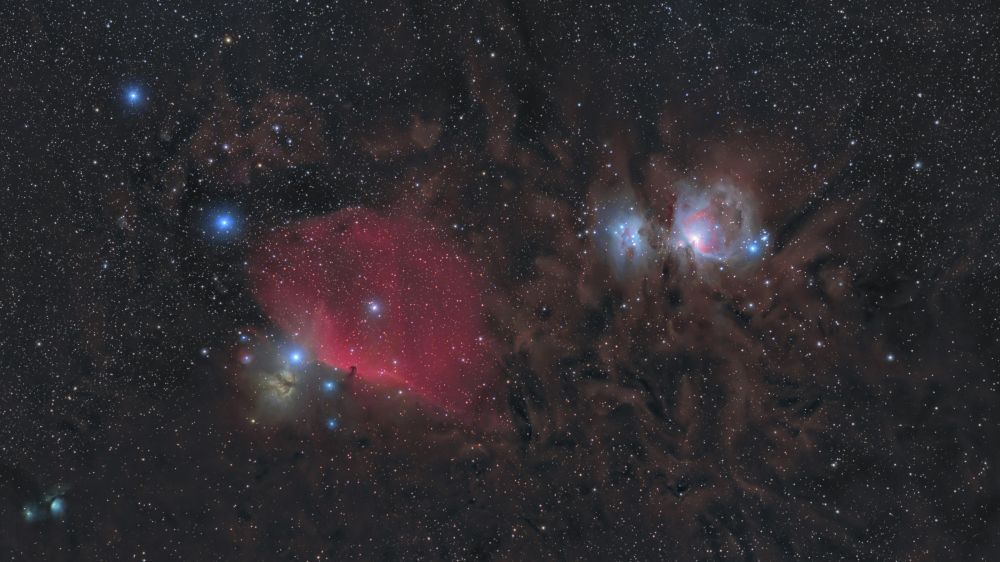
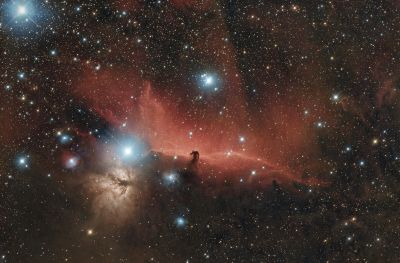
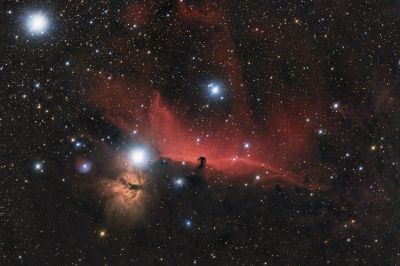
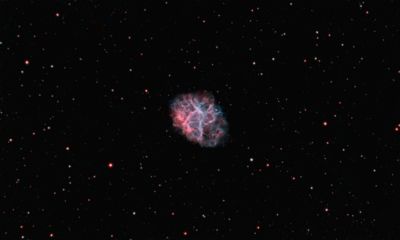
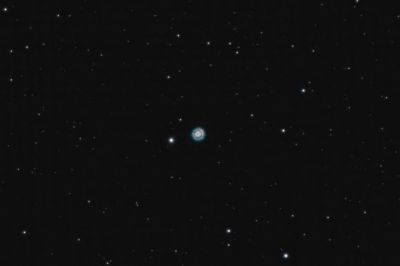
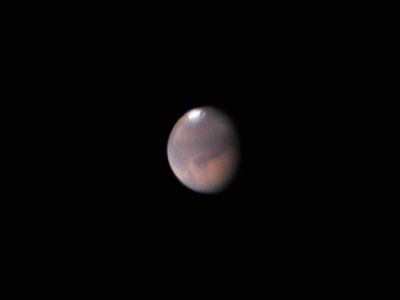
Crop, scale 60% of the original.
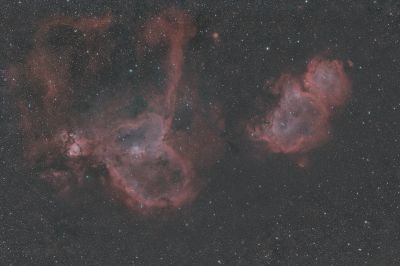
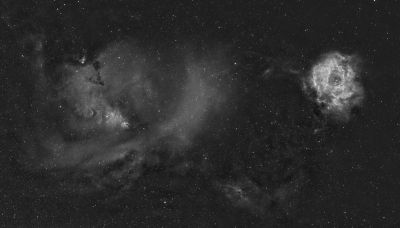
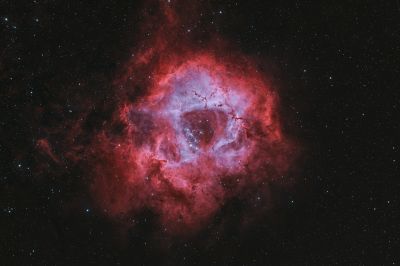
Signal was accumulated from late September to late October this year. I could have pulled more hydrogen, of course... I'll leave it as is for now.
I want to ask a question, if I ever dare to remove the IR filter from my Nikon and, say, even replace it with a 400-700nm filter, will I be able to capture something like this? With those enveloping nebulae? I only have a fast Newtonian 150/750 and a weak mount that limits me to 30-second exposures.
30 seconds is a bit short... here you either need a mount of a higher class or some fast lens, then you can set a longer exposure and gather light faster.
Otherwise, yes, these nebulae can definitely be captured in color under dark skies or with a dual-band filter (like Optolong L-eXtrime, Antlia ALP-T, Optolong L-Ultimate) under heavy light pollution. They can even be captured in color in a white zone, but you need to accumulate a lot of signal—for me, the nebula near Mintaka appeared after 5 hours of integration at f/2.4 (aperture speed rules!).
21 Nov, 2022
Reply
Comments are available only to registered users. Register or log in to leave a comment.

Comments
Otherwise, yes, these nebulae can definitely be captured in color under dark skies or with a dual-band filter (like Optolong L-eXtrime, Antlia ALP-T, Optolong L-Ultimate) under heavy light pollution. They can even be captured in color in a white zone, but you need to accumulate a lot of signal—for me, the nebula near Mintaka appeared after 5 hours of integration at f/2.4 (aperture speed rules!).
Comments are available only to registered users. Register or log in to leave a comment.