DeepSkyHosting

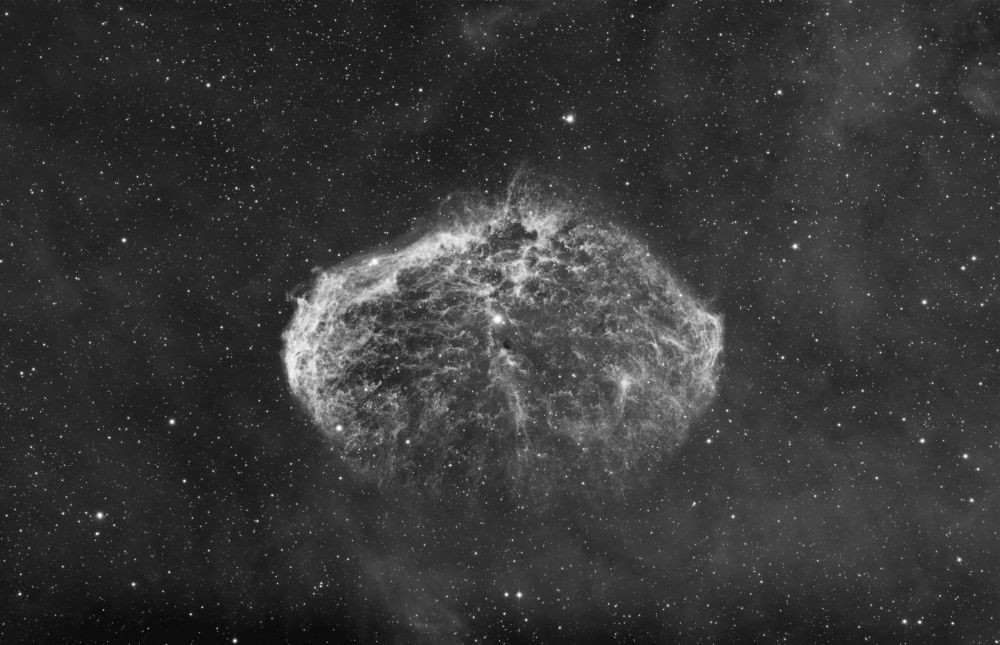
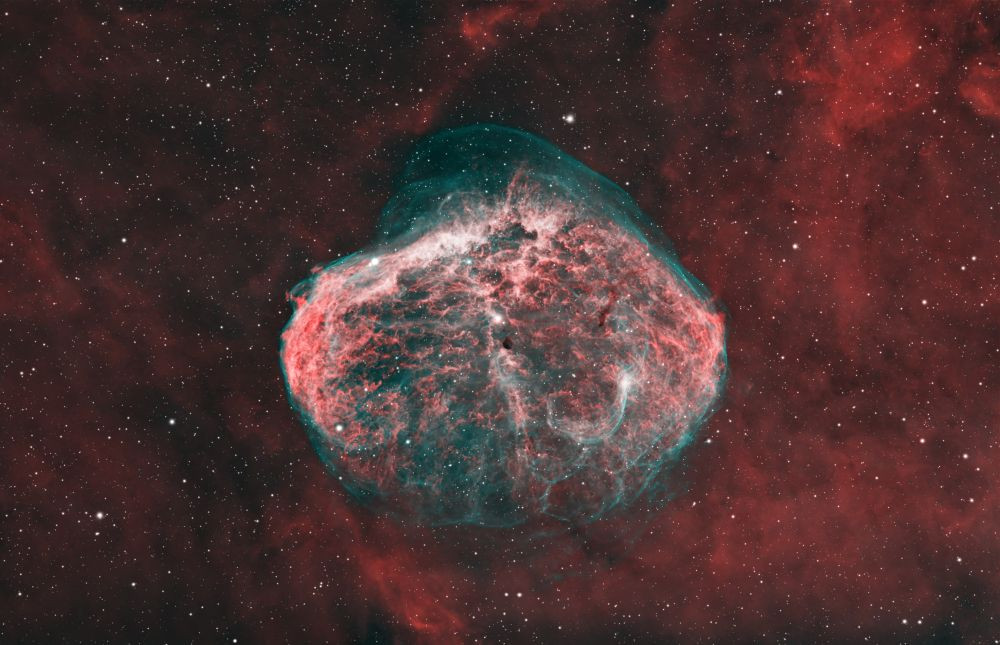
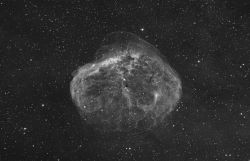
NGC 6888 Crescent Nebula

Category:Deep Sky
Published:
440
NGC 6888 Crescent NebulaNGC 6888
Resolution:
6054x3908 px
File size:
9721 KB

Photo description / processing

I prefer the name "Cosmic Brain."
This is the first object captured with my new telescope, the Celestron C11 EdgeHD.
I'm very pleased with the result—the detail is impressive.
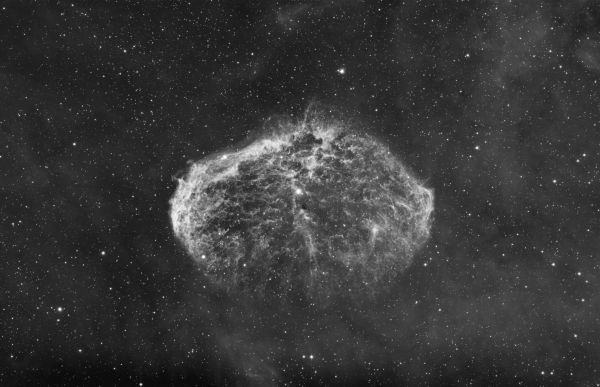
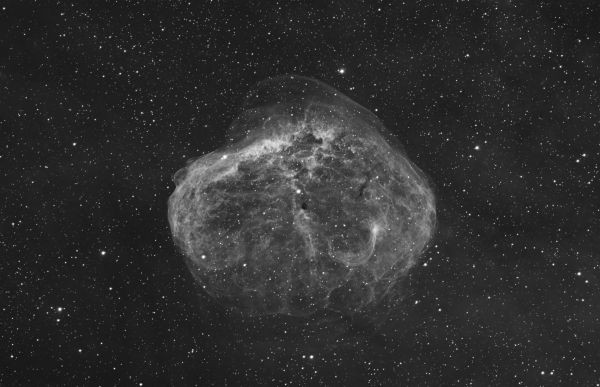
I especially liked how the hydrogen channel looks, but unfortunately, after combining it with oxygen, it becomes blurred.

This emission nebula is located in the constellation Cygnus and is formed around the supergiant star WR 136 (HD 192163) of the Wolf–Rayet type,
which sheds its outer shell with a strong stellar wind.
WR 136 is 5 times larger and 21 times heavier than the Sun. Its surface temperature is about 70,800 K,
and its luminosity is roughly 600,000 times that of the Sun. Its age is estimated at 4.7 million years.
It is expected to explode as a supernova within the next few million years.

Nebula dimensions: approximately 25 by 18 light-years
Distance from the Sun: approximately 4,700 light-years
Apparent size: 20'×10'

Technical information

Telescope/Lens
Celestron EdgeHD 11
Camera
ZWO ASI2600MM Pro
Mount
MT25
Guide Scope
SVBONY SV238 OAG
Guide Camera
ZWO ASI174MM Mini
Accessories
Celestron 0.7x reducer, ZWO ASIAIR Plus, ZWO EFW
Software
Pixinsight, Adobe Photoshop
Location
Kolomna, Russia

Light pollution

Orange, Bortle 6 zone

Date taken

Exposure

  • 20 × 600″ · ISO/Gain: 100 · Antlia Pro Ha 3nm 36mm ·
  • 20 × 600″ · ISO/Gain: 100 · Antlia Pro Oiii 3nm 36mm ·

Total exposure: 6 h 40 m

Photo versions

NGC 6888 Crescent Nebula
Current photoUpdated
NGC 6888 Crescent Nebula

Aug 16th, 2026

6 h 40 m

I prefer the name "Cosmic Brain."This is the first object captured with my new telescope, the Celestron C11 EdgeHD.I'm very pleased with the result—the detail is impressive.I especially liked how the hydrogen channel looks, but unfortunately, after combining it with oxygen, it becomes blurred. This emission nebula is located in the constellation Cygnus and is formed around the supergiant star WR 136 (HD 192163) of the Wolf–Rayet type,which sheds its outer shell with a strong stellar wind.WR 136 is 5 times larger and 21 times heavier than the Sun. Its surface temperature is about 70,800 K,and its luminosity is roughly 600,000 times that of the Sun. Its age is estimated at 4.7 million years.It is expected to explode as a supernova within the next few million years. Nebula dimensions: approximately 25 by 18 light-yearsDistance from the Sun: approximately 4,700 light-yearsApparent size: 20'×10' Altitude above the horizon: 45°–70°Frame field of view: 0.65° x 0.43°
Show changes
Previous version
Current version

Comments

There are no comments on this photo yet.

More photos by Evgeniy Sergeev