Thank you for sharing your photos - this is exactly what this project is all about! :-)
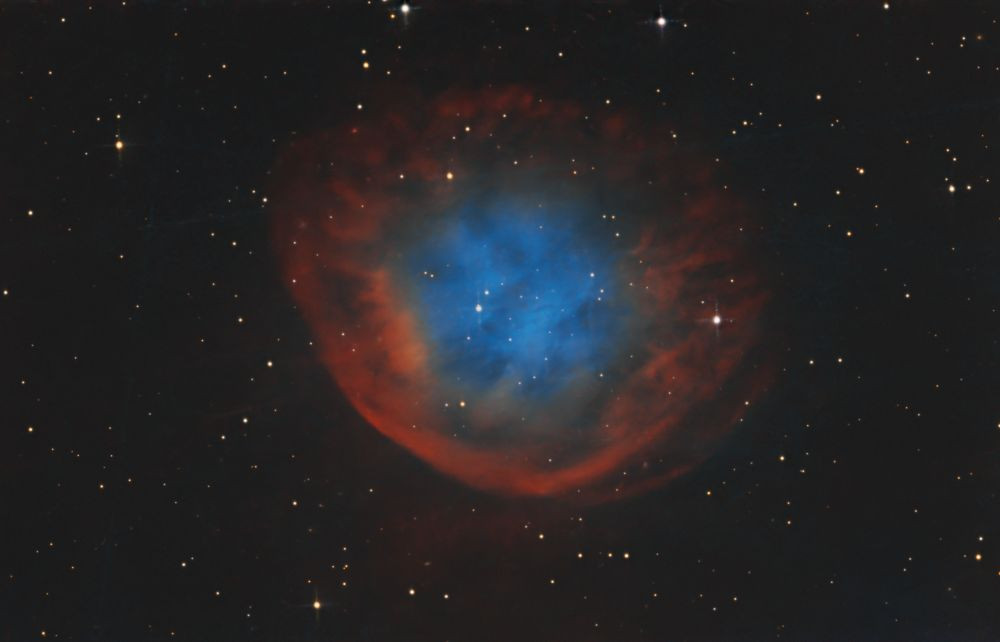
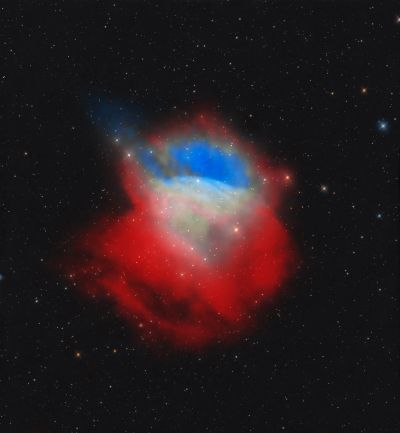
A very faint planetary nebula. I captured it over four evenings during the waxing moon; the last evening had to be discarded because it made the image even fainter. I'll try to gather more data, but it's already quite low in the sky for me and will likely be invisible by the next new moon. This is also an area with many satellites, and combined with the object's very low surface brightness, I had to stretch the data heavily, so satellite trails are visible. Still, I'm happy I captured a new object for myself.
Sh2-290 (also known as Abell 31) is an ancient planetary nebula in the constellation Cancer. It is estimated to be about 2,000 light-years away. Although it is one of the largest planetary nebulae in the sky, it is not very bright. The central star of the planetary nebula is a white dwarf of spectral class DAO. A white dwarf is the dead remnant of a star that existed and died, leaving behind the Sh2-290 nebula and the white dwarf. Sh2-290 is composed mainly of hydrogen and oxygen. The nebula has a blue central region that occupies most of it, surrounded by a red ring. Due to its age, the nebula is dispersing its gas into the interstellar medium.
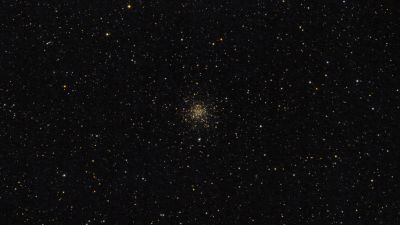
You really need dark skies here. I shot yesterday with the moon at 50%, thinking something might come out. When I stacked the frames, I realized the previous attempts were better.


Comments
Comments are available only to registered users. Register or log in to leave a comment.