DeepSkyHosting

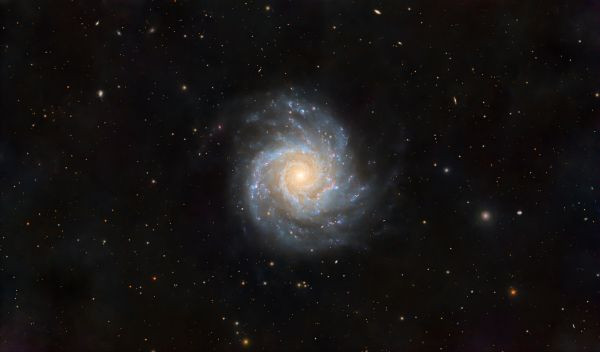
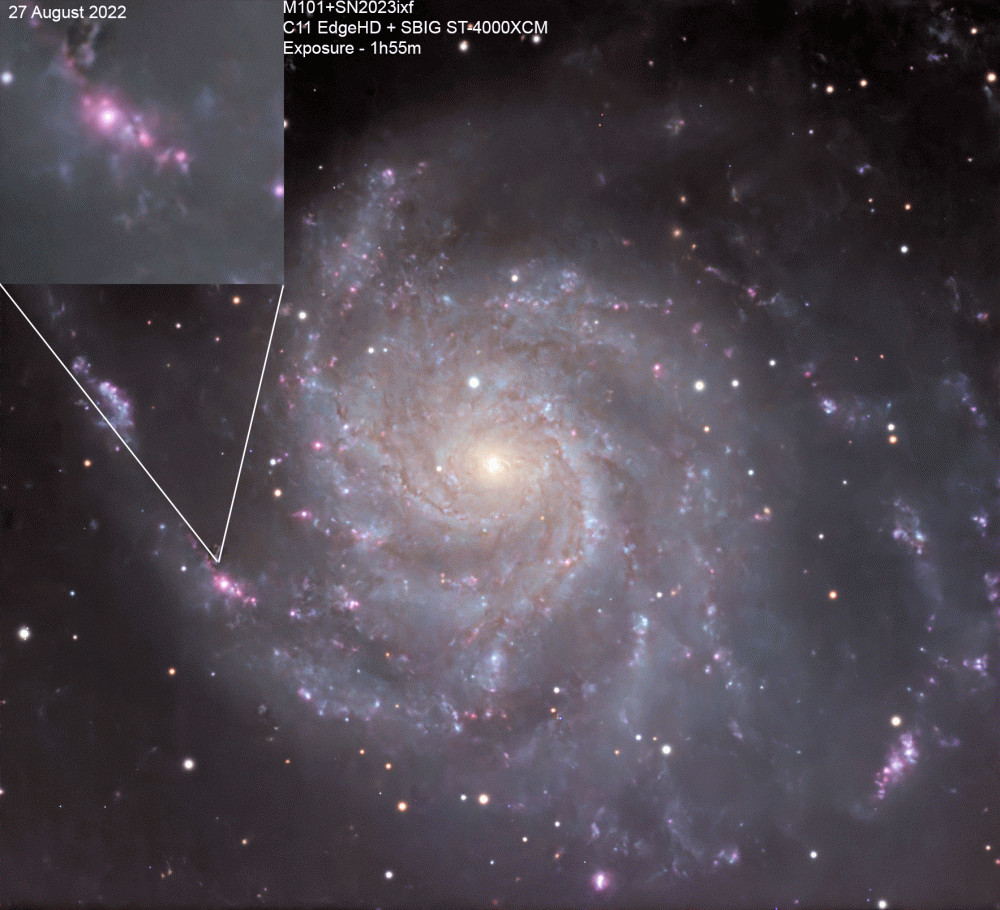
M101+SN2023ixf animation

yas
1321817
Category:Deep Sky
Published:
611
M101+SN2023ixf animationNGC 5447NGC 5449NGC 5450NGC 5453NGC 5458NGC 5451NGC 5455NGC 5457NGC 5461NGC 5462
Resolution:
1767x1608 px
File size:
7457 KB

Photo description / processing

SN 2023ixf is the brightest and closest supernova to Earth in the past decade. Japanese astronomer Koichi Itagaki first reported observations of the supernova as a transient with an apparent magnitude of +14.9m on May 19, 2023. As of May 22, 2023, the supernova's apparent magnitude was +10.8m. It is interesting how the supernova's color changed over time—from blue to yellow to red.

Technical information

Telescope/Lens
Celestron EdgeHD 11
Camera
SBIG ST-4000XCM
Mount
Celestron CGE
Guide Scope
SBIG AO-8
Guide Camera
SBIG-ST-4
Accessories
SBIG AO-8 Adaptive Optics Unit
Software
PixInsight, Photoshop
Location
Подмосковье, Кубинка (недалеко), Россия

Light pollution

Orange, Bortle 6 zone

Date taken

Exposure

  • 3 × 900″ · ISO/Gain: 0 ·

Total exposure: 45 m

Photo versions

M101+SN2023ixf animation
Current photoUpdated
M101+SN2023ixf animation

Feb 2nd, 2026

45 m

SN 2023ixf is the brightest and closest supernova to Earth in the past decade. Japanese astronomer Koichi Itagaki first reported observations of the supernova as a transient with an apparent magnitude of +14.9m on May 19, 2023. As of May 22, 2023, the supernova's apparent magnitude was +10.8m. It is interesting how the supernova's color changed over time—from blue to yellow to red.
Show changes
Previous version
Current version

Comments

More photos by yas