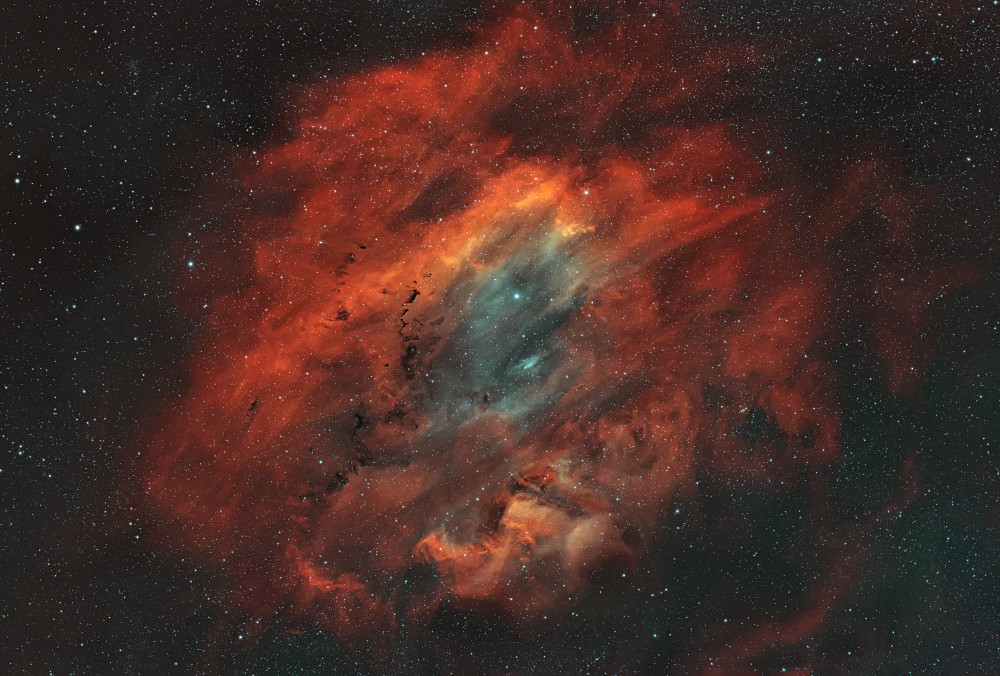
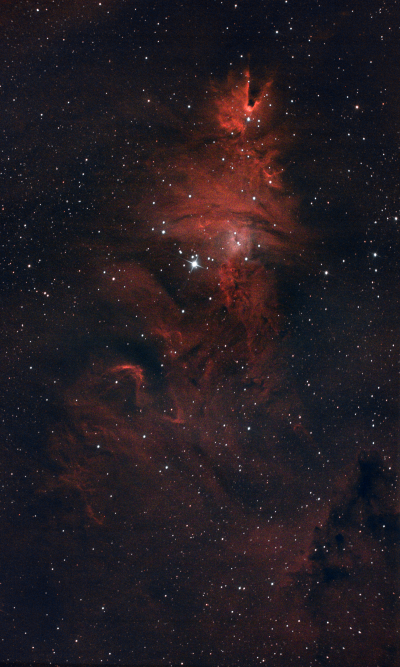
I didn't bother with the stars anymore. The weather just didn't allow it, and I wanted to start on another object anyway. I struggled with it for a long time. In total, about 20 hours were captured, but half of the frames simply ended up in the trash.
Separately, before all this, you can do SPCC (photometric color calibration) to bring the color closer to the real one (with narrowband filter settings specified, of course).
SCNR works fine) yes, sometimes you get purple ones and then you need to invert the image and apply SCNR again
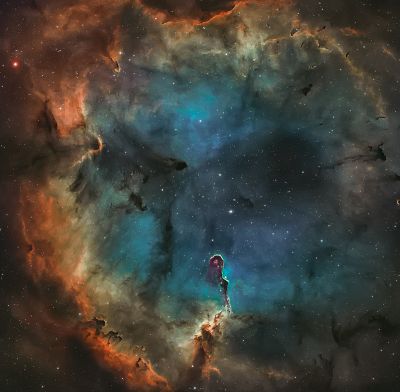
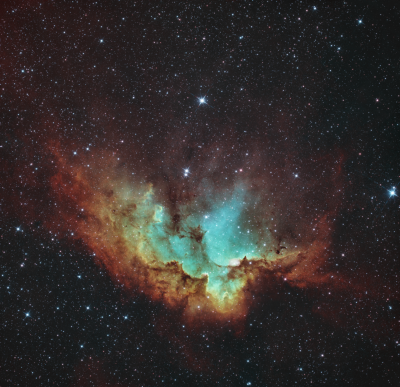
in this case, as far as I understood, RGB stars were not captured, so the ones that came out of SHO had to be desaturated and that's it.
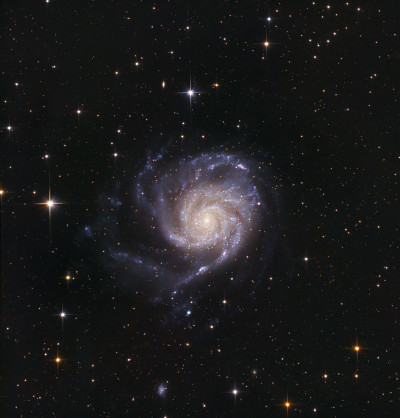
In this example, you've captured it in a wide band, and there is signal in the B channel. Of course, if you remove the green, the blue will remain :)
But we're discussing a narrow band, where there is almost no blue channel. If you also remove the green signal, at best you'll get white or yellowish stars, which will be very difficult to turn into blue ones.
And in any case, SCNR is removal of useful signal; it's better to use it only in extreme cases.
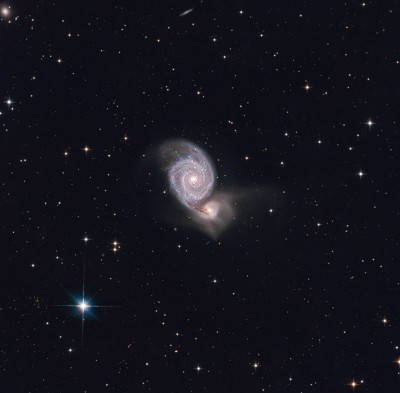
I gave a wide spectrum as an example to show, against that background (with the correct color), that SCNR is fine and the colors remain correct. It's just that cameras have quantum efficiency up to 100 percent, so green ends up stronger than the other two colors. That's a parasitic green tint. The signal isn't really useful and gets removed. It gets corrected)
- Star removal and white/yellowish synthesis: Remove stars from the finished SHO image, process the nebula, then bring the stars back from the pure channel (H) (they'll be white), slightly tinting them into a yellow-orange range via curves.
- Using masks in PixInsight: Create masks by color (e.g., Color Mask on magenta and green) to locally reduce the saturation of purple halos around stars, or use the trick of inverting the image (Invert -> SCNR -> Invert) to combat magenta.
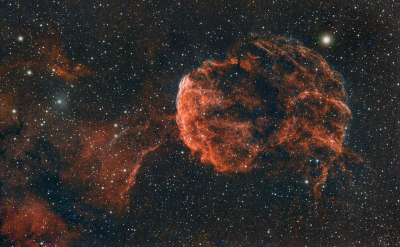
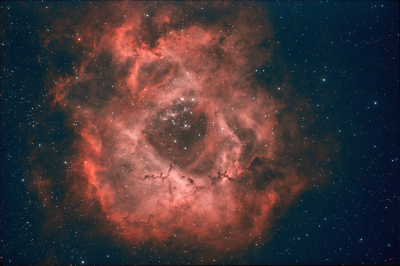
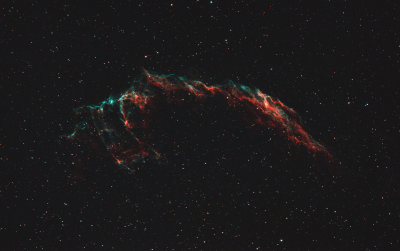
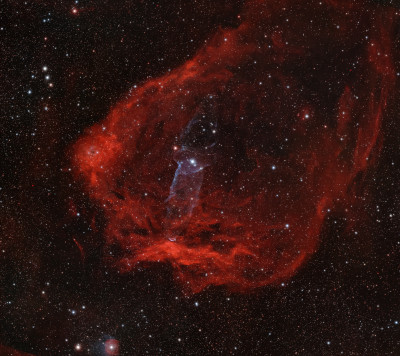
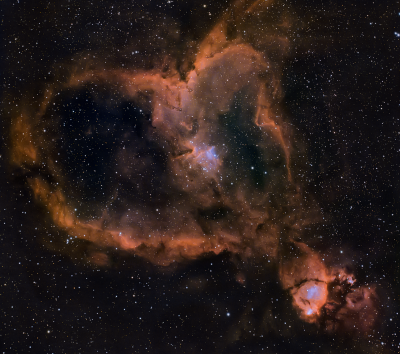
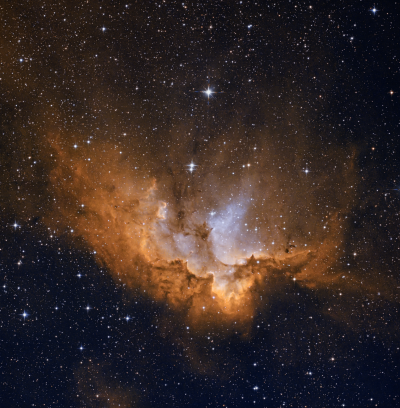
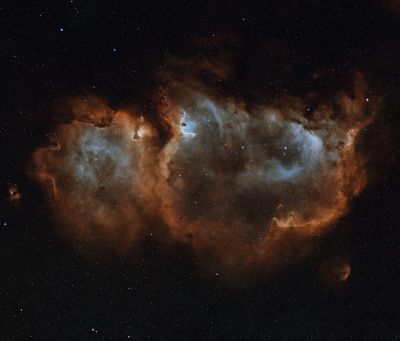
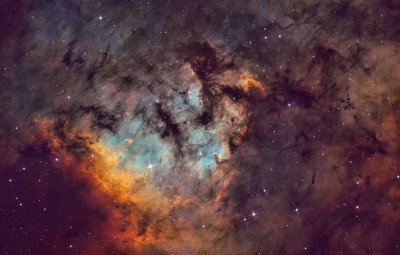
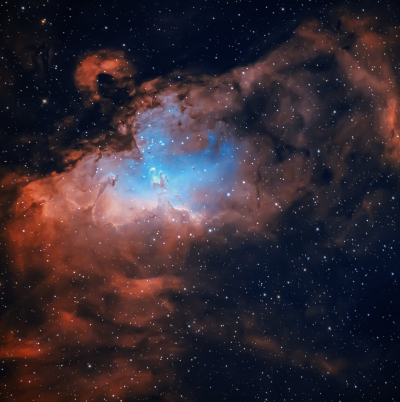
Turned out great. It would be nice to bring the stars to normal colors as well. And how was the palette assembled? This isn't classic SHO. Hydrogen and oxygen in their natural colors. And sulfur?

Comments
PS It seems that the stars are greenish and colorless. Just my taste.
It is better to correct the HUE curve, if there is no possibility to shoot in RGB.
Separately, before all this, you can do SPCC (photometric color calibration) to bring the color closer to the real one (with narrowband filter settings specified, of course).
in this case, as far as I understood, RGB stars were not captured, so the ones that came out of SHO had to be desaturated and that's it.
But we're discussing a narrow band, where there is almost no blue channel. If you also remove the green signal, at best you'll get white or yellowish stars, which will be very difficult to turn into blue ones.
And in any case, SCNR is removal of useful signal; it's better to use it only in extreme cases.
- Star removal and white/yellowish synthesis: Remove stars from the finished SHO image, process the nebula, then bring the stars back from the pure channel (H) (they'll be white), slightly tinting them into a yellow-orange range via curves.
- Using masks in PixInsight: Create masks by color (e.g., Color Mask on magenta and green) to locally reduce the saturation of purple halos around stars, or use the trick of inverting the image (Invert -> SCNR -> Invert) to combat magenta.
Stars are ready
Comments are available only to registered users. Register or log in to leave a comment.