


HYDROGEN NEBULOSITIES AT CYGNUS
Technical information
- Telescope/Lens
- Canon EF 35mm f/2 IS USM Lens
- Camera
- ZWO ASI178MM
- Mount
- Sky-Watcher Star Adventurer
- Software
- ASIcap, Pixinsight, FitStacker, Fitswork, Adobe Photoshop, Adobe Lightroom
- Location
- Красноярск, Россия
Light pollution
Green, Bortle 4 zone
Exposure
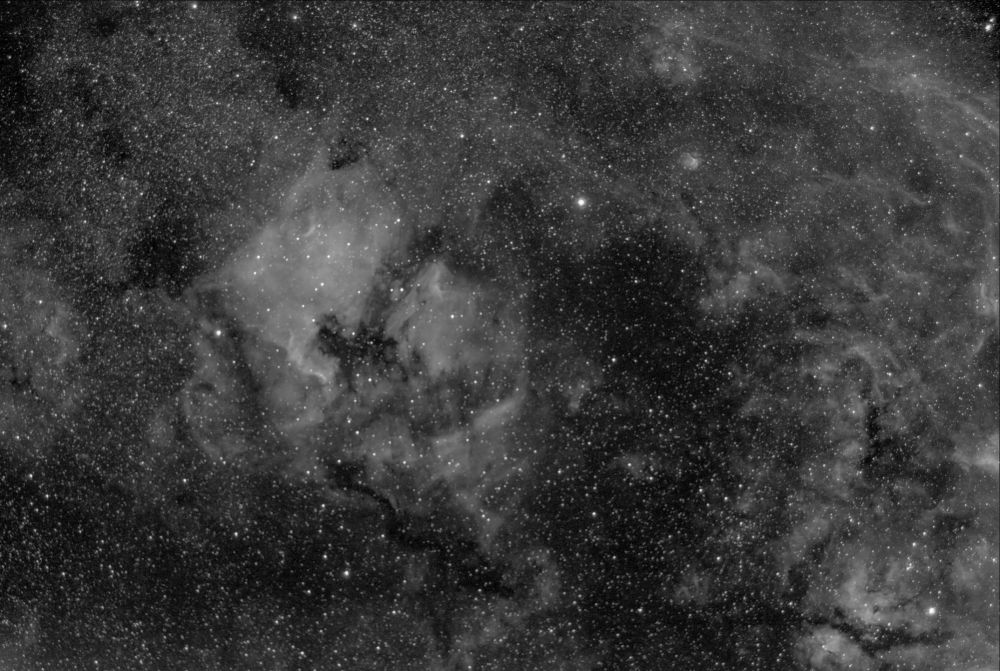
- 6 × 120″ · ISO/Gain: 400 · H-alpha
- 20 × 180″ · ISO/Gain: 300 · H-alpha
- 6 × 120″ · ISO/Gain: 400 · H-beta
- 5 × 120″ · ISO/Gain: 400 · O-III
- 5 × 180″ · ISO/Gain: 300 · O-III
Total exposure: 1 h 49 m
Photo versions


Show changes


Comments
Reply
Sign up or sign in to leave a comment.
Reply
Sign up or sign in to leave a comment.
Reply
Sign up or sign in to leave a comment.
Reply
Sign up or sign in to leave a comment.
Reply
Sign up or sign in to leave a comment.
Reply
Sign up or sign in to leave a comment.
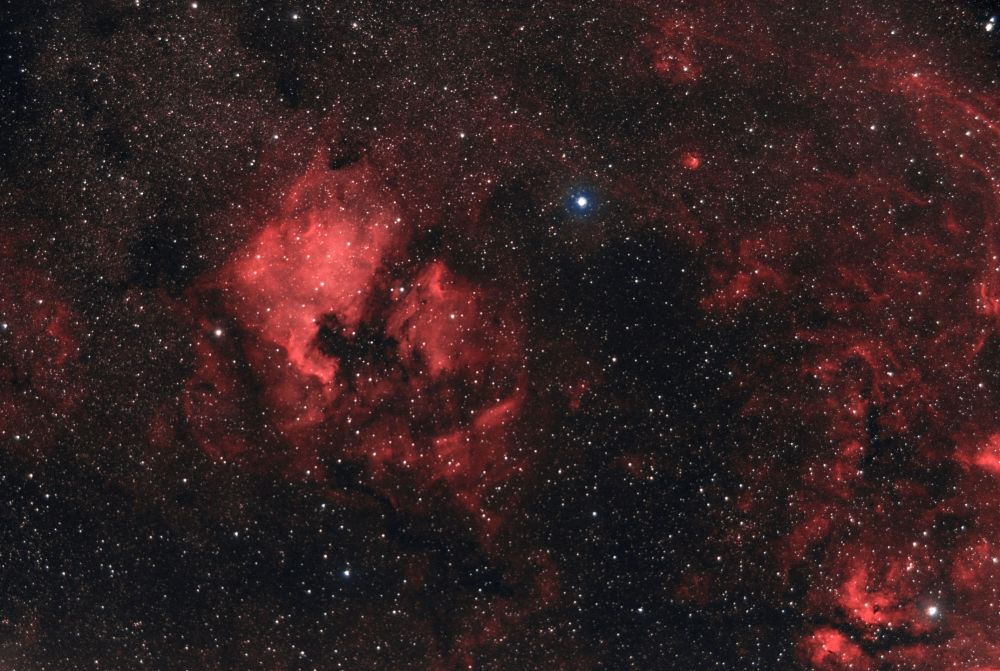
But overall, I think it will be clear what's what. The images were taken with an open setup and without a microfocuser, so the stars are poor, and there were also initial problems with calibration. Now I could improve the result with the same equipment. I abandoned shooting in H-beta because it almost completely duplicates Ha and also captures a bit of oxygen. The contribution of blue from the H-beta line can be created synthetically by mixing Ha into the blue channel when assembling the pseudo-color image.
Reply
Sign up or sign in to leave a comment.
Reply
Sign up or sign in to leave a comment.
Sign up or sign in to leave a comment.