Thank you for sharing your photos - this is exactly what this project is all about! :-)
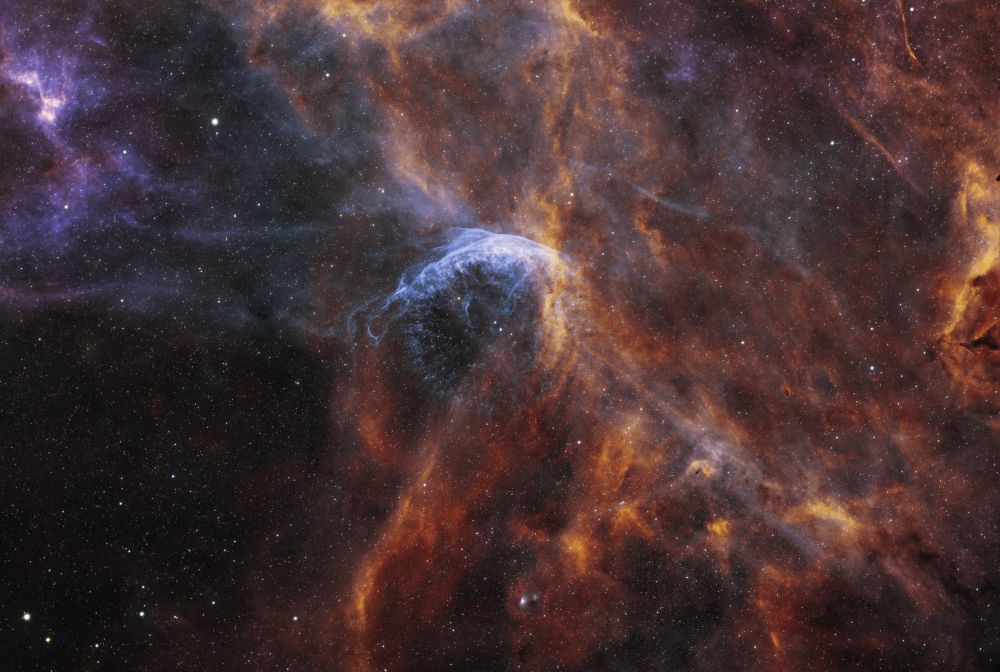
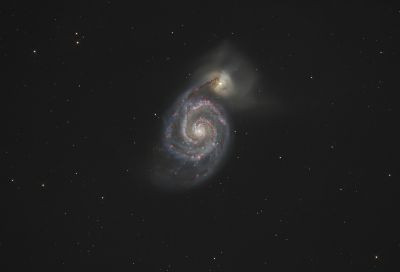
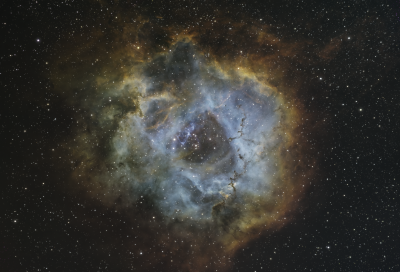
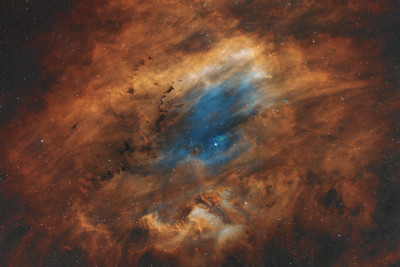
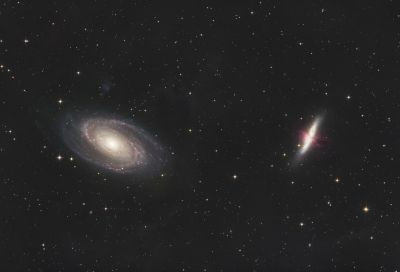
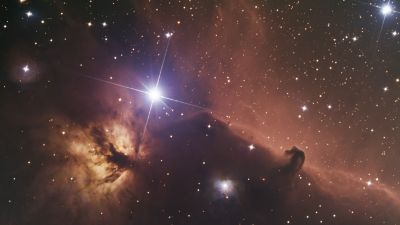
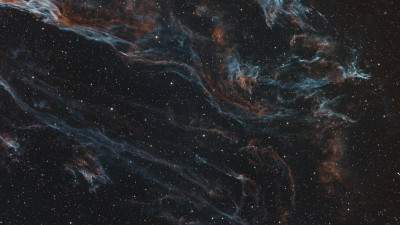
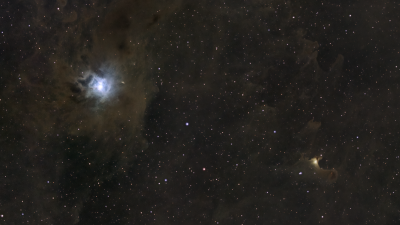
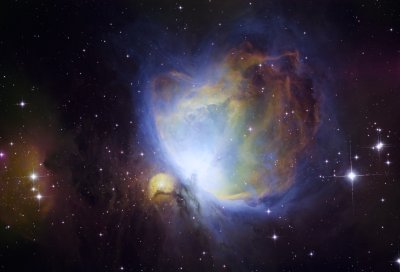
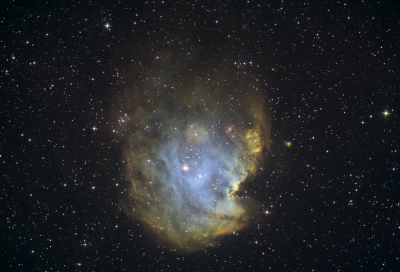
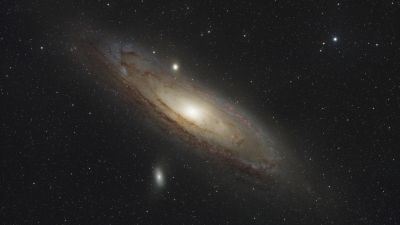
Three nights of shooting. Stars in RGB + background in Ha + Oiii. Applied a coloring method where the color depends on the brightness. Therefore, there are more than two colors in the background.
For example, take the hydrogen channel. Everything there is red. You can create a mask that isolates the brightest red tones and change their color. In this photo, yellow has been added to the brightest red areas. The same applies to the oxygen channel.
Hi fellow countryman! The photo is great! Could you tell me, if it's not too much trouble, how do you find this telescope? I want to upgrade, and I'm considering this model as an option, but something is bothering me.
Good day. I am very pleased with this telescope. I was scared by some kind of traffic lights on the stars. There is a slight chromatic aberration. But this is an APO - this effect is bound to be there. The telescope comes with three reducers: x0.6, x0.8, and x1.0. With the x0.6 reducer it performs poorly. But with x0.8 everything is good. I haven't tried x1.0. The stars are fluffy and even across the entire field. They say that a certain amount of luck plays a role. Like, there are defective copies. But I don't have statistics. These are the fits from this telescope: https://drive.google.com/file/d/1Kk41oy9ZoEZir9ljjV0u9LzOB--i7MYV/view?usp=sharing

Comments
Comments are available only to registered users. Register or log in to leave a comment.