Resolution: 800x688 px
Scale: 77 KB
Thank you for sharing your photos - this is exactly what this project is all about! :-)
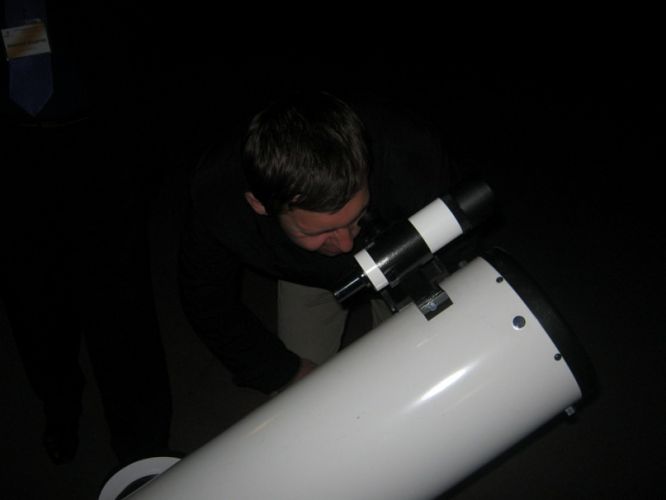
A few weeks ago, I finally managed to put together a kit for astronomy outreach. And only this past weekend was I able to test the telescope in action under a real sky. Even though the sky was so-so. Transparency and "seeing," as astronomy enthusiasts call it (a measure of atmospheric stability that affects the quality of astronomical images when observing with a telescope), were mediocre. But neither that nor fatigue diminished my desire to test both the Sky-Watcher 150PDS tube itself and the One Step system from the manufacturer Terrans Industry on the EQ3D mount, nor the possibility of imaging planets and even deep-sky in tracking mode with the ZWO 224 MC on the telescope.
So here is what we have in the end. The One Step Terrans Industry system performed quite well and stably, but with some peculiarities. For example, if you want to calibrate the telescope using three stars and you choose Omicron Piscium as one of them, then most likely you will not be able to do it, because in the list of stars by which calibration can be performed, this star most likely will not be there. The list of stars available for calibration consists mainly of bright stars or alpha stars of constellations. This is bad news, especially if you want to perform calibration in a strictly defined area of the sky before an astrophotography session. But there is also good news: the number of stars for calibration is not limited to 2 or 3. You can use even ten. Also, in the list of deep-sky objects, I could not find such a well-known object as the Horsehead (IC 434). But this system also has interesting and useful functions. For example, if the planet you are interested in is below the horizon at a given moment in time, then you will not be able to point your telescope at it. That planet simply will not be in the list.
As for the tube, I can say quite little here, because its "older sister" serves as my astrograph tube and has proven to be quite excellent. The 2-speed focuser performed its functions perfectly in combination with the ZWO ASI 224 MC camera, and the image quality was at a decent level. The only thing I can say is that this tube has quite good potential as a tool for both visual observations and astrophotography: not only planetary, but also deep-sky astrophotography. At the same time, it is quite compact and light compared to the 200PDS. If I carry the latter with both hands, then with the 150PDS I can confidently carry it with one hand holding it by the "dovetail."
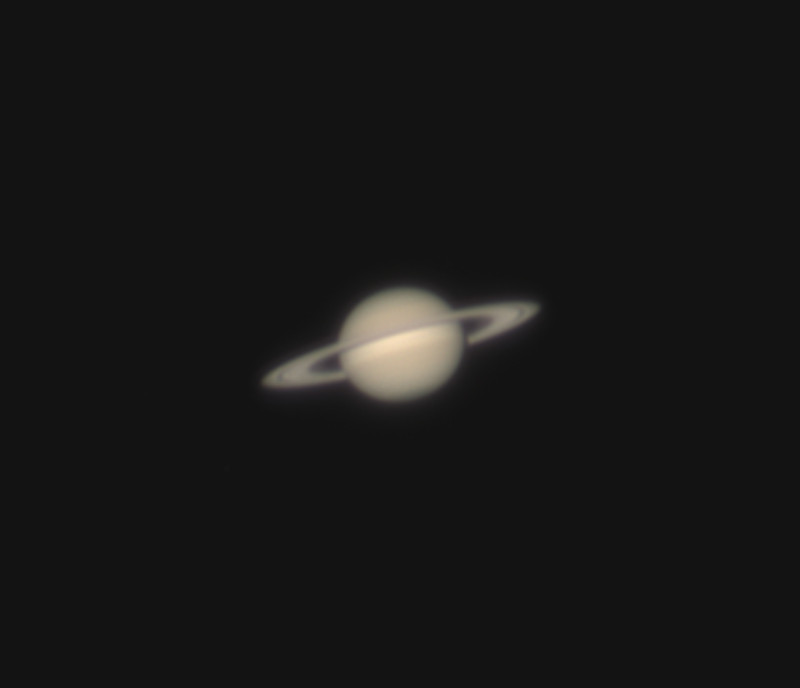
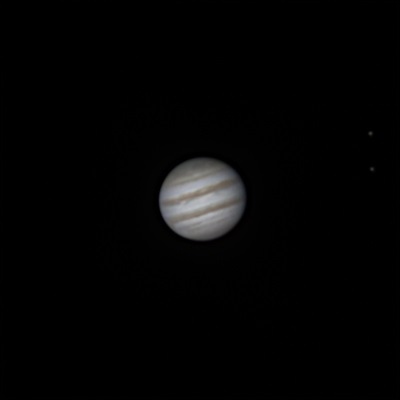
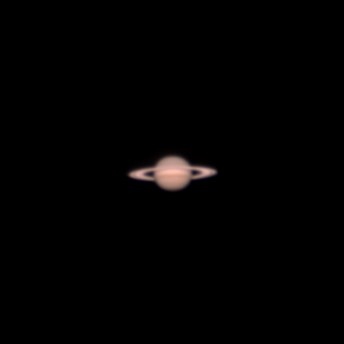
Working together with the camera and the 3x achromatic Barlow lens from SVBony that same night, I managed to photograph Saturn and, it seems to me, get quite decent results. Out of the 6 videos captured, only in one, when imaging the planet, can details be seen quite clearly.
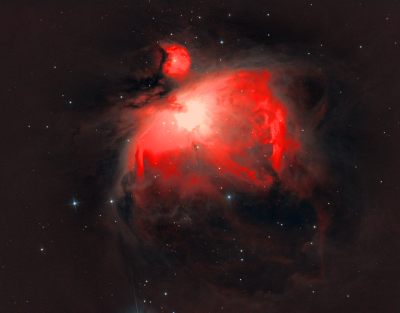
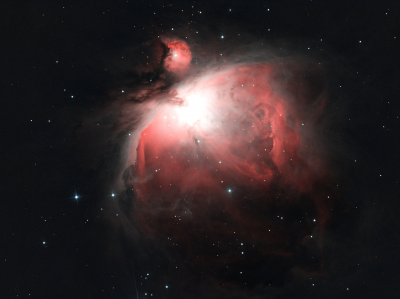
And at the end of the night, I decided to test my setup in a somewhat unusual and "sacrilegious" way - to photograph deep-sky with a planetary camera. And naturally I tested this possibility on M42. And to my surprise, even in what seemed like a nonstandard role, this camera, after several attempts to select the optimal ratio of gain, contrast, and exposure time, showed quite a decent result. Unfortunately, I did not save these images.


Comments
There are no comments on this picture yet
Comments are available only to registered users. Register or log in to leave a comment.