
The core of the Andromeda Galaxy, M31, in Hydrogen-alpha light.

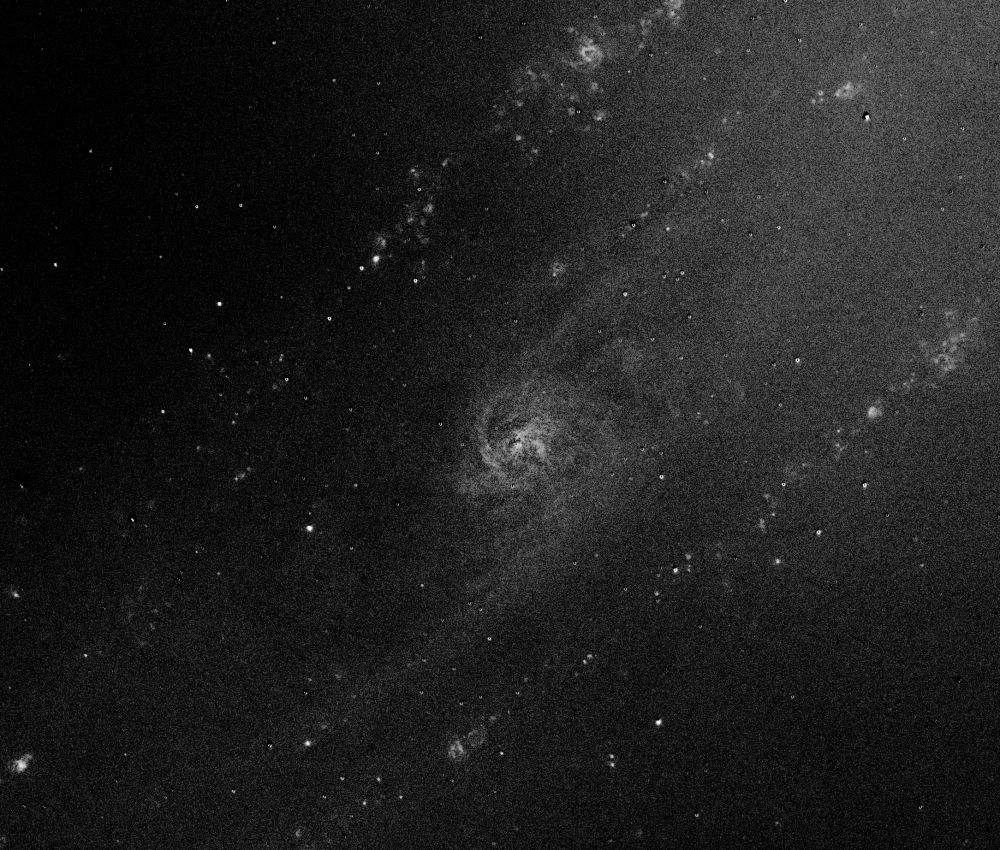
Photo description / processing
I'm experimenting with captured data of the Andromeda Galaxy, M31. Usually, the galaxy's core is heavily overexposed, even when shooting with a narrowband H-alpha filter. However, if you subtract the signals from the RGB filters from the H-alpha signal, interesting structures become visible, such as dust swirls formed by the collision of M31 and M32. These structures were first discovered by the Spitzer Space Telescope in 2006, and I managed to photograph them with a 102mm refractor from my backyard.
Technical information
- Telescope/Lens
- Explore Scientific 102mm ED APO Triplet FCD100
- Camera
- QHY183M
- Mount
- Sky-Watcher EQ6-R Pro
- Guide Scope
- QHY OAG
- Guide Camera
- QHY 290C
- Accessories
- Stellarvue 0.8x Field Flattener and Reducer
- Software
- EQMOD, SGP, SharpCap, PHD2, Pixinsight
- Location
- Beachwood, United States
Light pollution
Orange, Bortle 6 zone
- Date taken
Exposure




Comments
There are no comments on this photo yet.
Sign up or sign in to leave a comment.