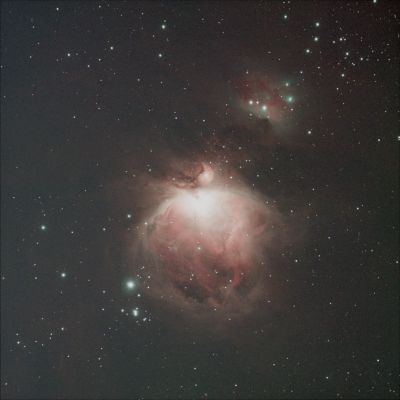
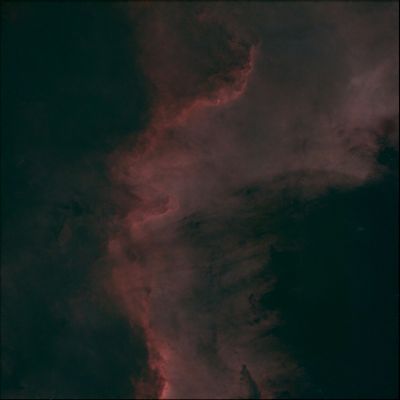
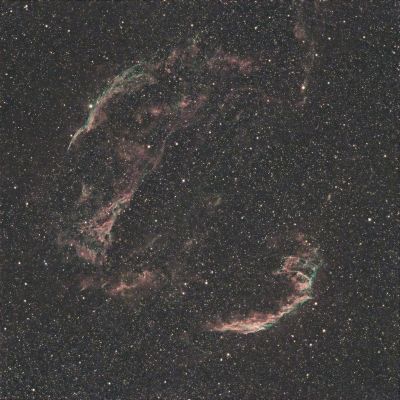
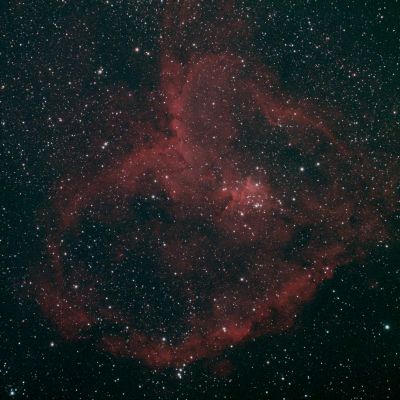
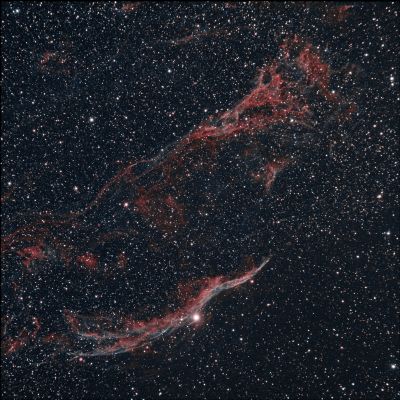
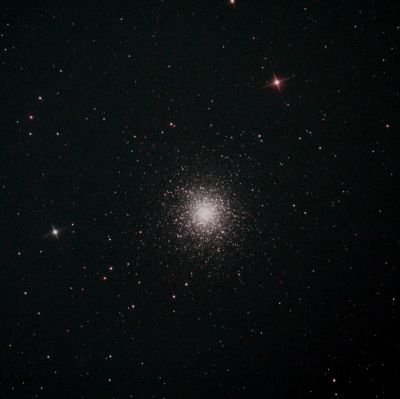
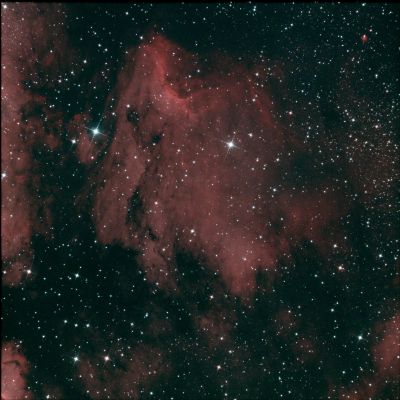
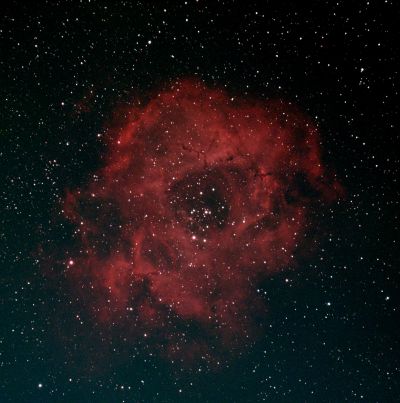
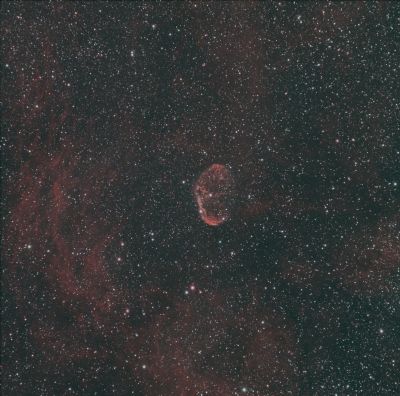
I set up 60 two-minute exposures at dawn, but only managed to get through 30 before the sky started to cloud over. Buying the camera was quite a spontaneous decision—I don’t even have a two-inch duo filter yet.
Quadband is like a universal soldier. It's similar to the L-PRO from Optolong, but for stronger light pollution. Triband and duoband are suitable for nebulae. I just wonder where all that signal, and hydrogen in particular, comes from.
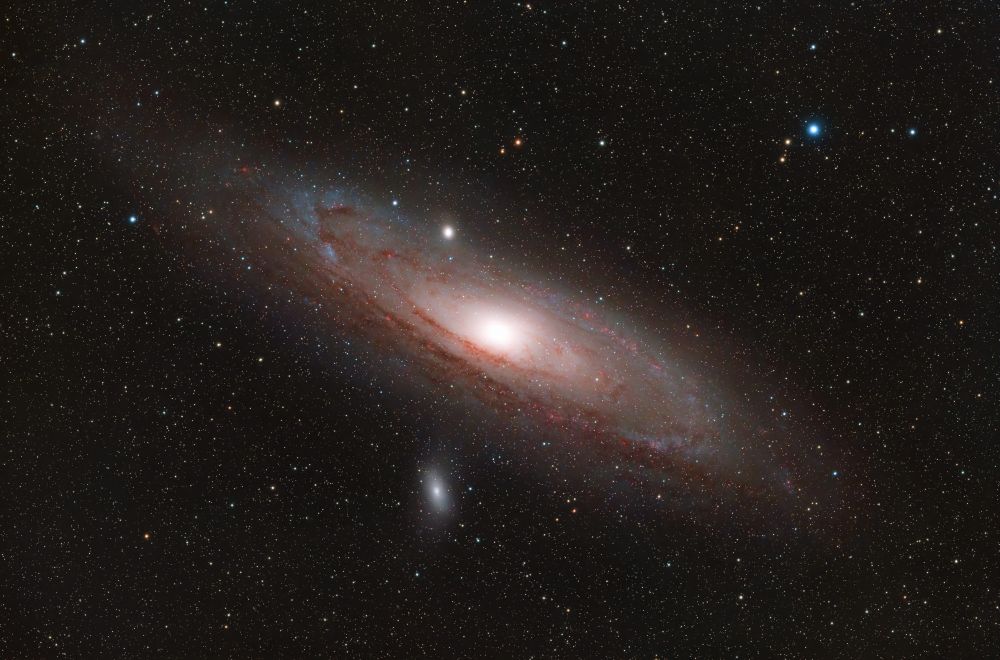
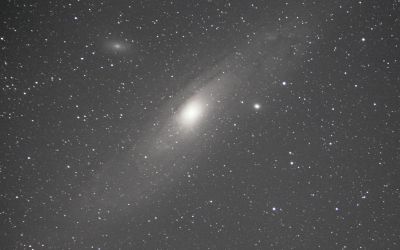
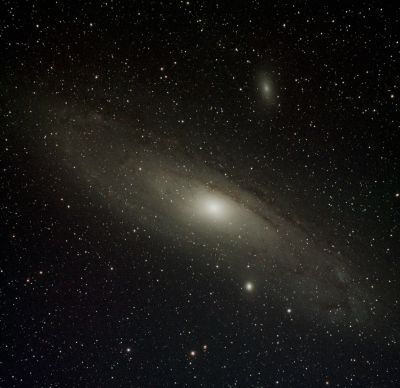
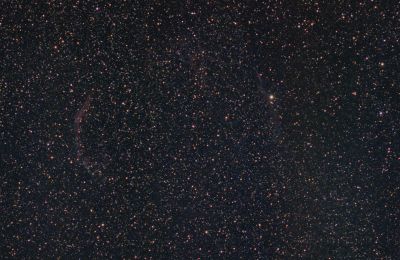
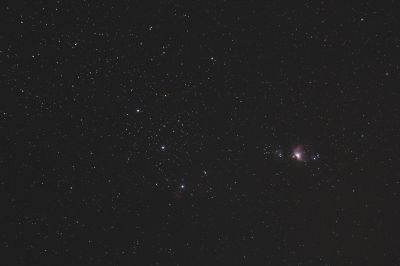
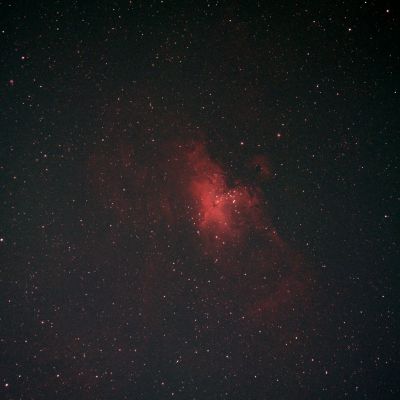
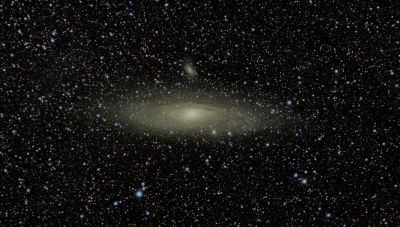
I just finished shooting M31 (https://www.deepskyhosting.com/WT1lWIB). Same camera (ZWO ASI2600 DUO). A telescope with similar speed (Askar 103APO 0.8x - f/5.6). I was shooting in a blue zone for light pollution. And somehow forgot to remove the filter (ANTLIA Quad Band). This filter has similar specs to yours, but it also has a window in the infrared part. Meaning, it passes no less light. I didn't notice right away that the shots were dark. I shot for an hour. Out of curiosity, I stacked them at home. It wasn't even close to what's in the discussed photo. Therefore, I'm expressing my skepticism. No offense.
I use a PixInsight, AI is present in BXT and NXT, but as for using neural networks to generate images—no way. I can't prove in any way that I did everything myself—from capturing 30 subs (first I shot 29 out of 60 frames with a gain of 50 and temperature -10, then the camera disconnected due to an old USB3 cable; I plugged it into another port on the ASIAir; when the connection was restored, I deleted what was captured, set the usual gain 100 and temperature 0, and redid 30 out of 60, then clouds rolled in) to processing.
As they say, it's inexplicable but true. The triband filter could isolate the hydrogen and reduce the brightness, which might have revealed details + the 2600 camera also helps, but it still seems a bit hard to believe. I shot with a 61mm Sharpstar at 360mm and even stacked 5 hours, and I still didn't get such a result (you can check my first work). By the way, I also took a test shot with a quad-band filter, and there's clearly no such level of detail and hydrogen there either. Speaking of which, I checked your stacked data and got a strange gradient. It's stepped.
Well, even though my colleagues' skepticism stings, I'm not going to try to prove anything to anyone else. I did what I could with an hour of exposure time.


Comments
Here is a screenshot of the folder with the light frames. Why would I make anything up?
Comments are available only to registered users. Register or log in to leave a comment.