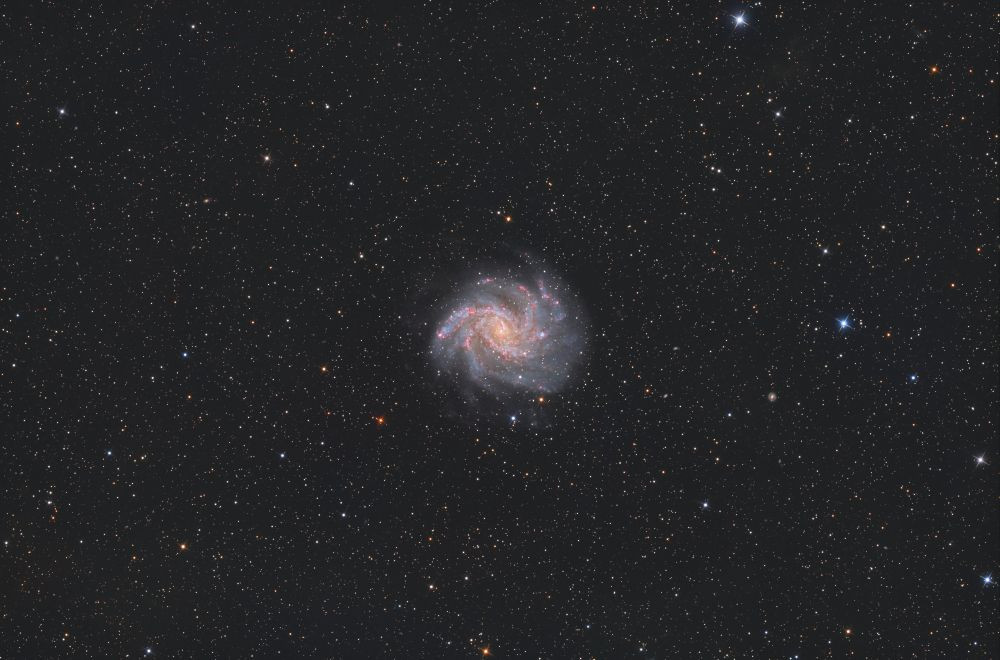
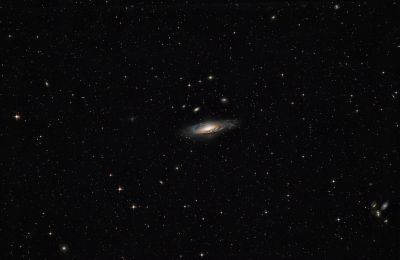
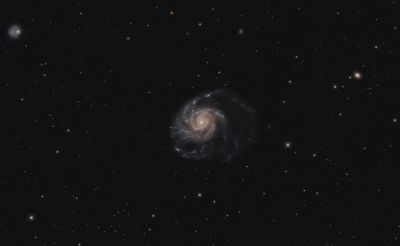
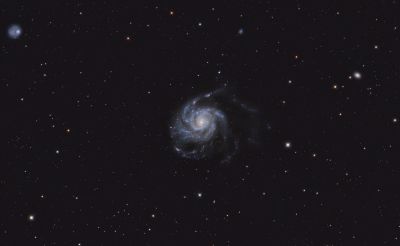
The main feature of NGC 6946 is the unusually large number of observed supernovae.
From 1917 to 2017, ten such events were recorded in it, earning it the name Fireworks Galaxy.
Most of them are associated with the collapse of massive young stars.
For comparison, the Milky Way is expected to have about one or two supernovae per century, whereas about ten were observed in NGC 6946 over the same period. This difference is partly explained by the high star formation rate and partly by the galaxy's convenient nearly face-on orientation.
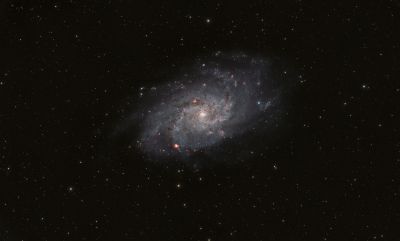
The color structure of NGC 6946 well illustrates the evolution of a spiral galaxy:
• The yellowish core contains predominantly old stars.
• Blue clusters consist of young hot stars.
• Red H II regions mark sites of ongoing star formation.
• Dark filaments represent cold dust clouds.[nasa]
NGC 6946 hosts one of the most famous candidates for a "failed supernova" — N6946-BH1. A star about 25 times more massive than the Sun flared brightly in 2009 but then disappeared in the visible range without a full supernova explosion; the initial interpretation suggested a direct collapse of the star into a black hole.
However, the question is not yet closed — JWST observations have revealed a complex infrared source that also allows an alternative explanation, such as a stellar merger. Therefore, N6946-BH1 remains a very strong but not yet indisputable candidate for a failed supernova.

Comments
There are no comments on this picture yet
Comments are available only to registered users. Register or log in to leave a comment.